

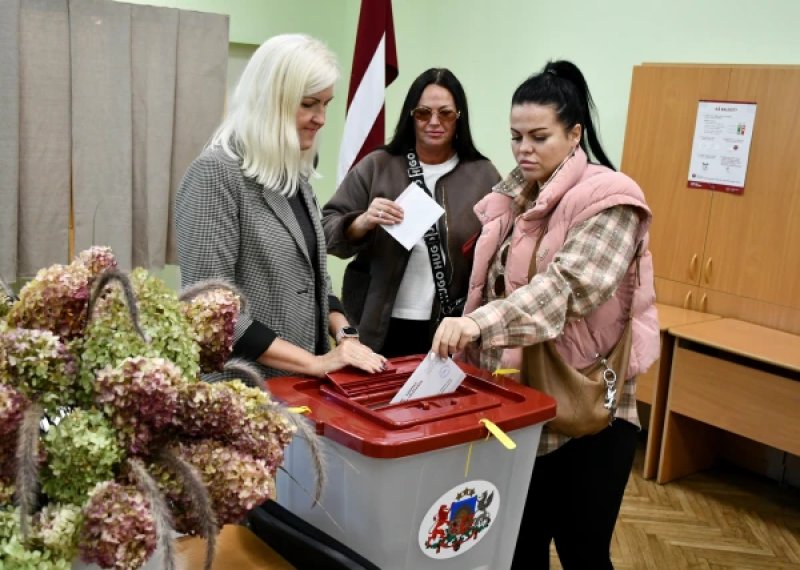
The elections to the 15th Saeima generally went smoothly and without serious disruptions, stated the chairman of the Central Election Commission, Maris Zviēdris, at a meeting of the parliamentary commission on state administration and local governments, as reported by Latvijas Avīze. At the same time, the CEC already sees a number of procedures that need to be improved before the upcoming elections to the European Parliament and local governments. One of the main issues was the verification of votes that were submitted in advance for storage. According to current rules, a voter can subsequently come to the polling station and change their vote — in this case, the previously cast vote must be found and annulled. In the previous elections, 139 people took advantage of this opportunity, while in the current elections, the number has already reached 740. As a result, multiple verifications were required before the counting began. The ballot boxes were allowed to be opened only after all polling stations had completed the procedure for annulling previously cast votes. Consequently, the actual start of counting was delayed by several hours. The CEC explains this caution as necessary to eliminate errors: after the elections, the results can be contested, so the commission must be confident in the correctness of the procedure. The problem is also related to the wording of the Constitution. Its Article 11 stipulates that elections to the Saeima are held on the first Saturday of October. Therefore, legally, the existing procedure up to election day is considered not early voting, but rather the transfer of a vote for storage. One possible solution could be to amend Article 11 of the Constitution, which would allow for full early voting. Another option would be to allow a voter to change their vote only once and only within one polling station. At the same time, the organization of the current elections is positively assessed by the CEC. Zviēdris particularly praised the command center created based on the example of Estonia. For a week, representatives from 16 institutions and organizations worked together there. On election day, this allowed participants in the process to be in one place, make quick decisions, and coordinate actions. "On Saturday, all participants in the process sat at one table, decided what to do on the spot, and collaborated as a single entity," Zviēdris said. He also positively evaluated the work of Tet, Latvijas Mobilais telefons (LMT), and Latvijas valsts meži, which ensured the operation of the electoral system. There was relatively little time to create it — work began only in April. According to the head of the CEC, some of the security measures taken may have seemed excessive; however, in the current geopolitical situation, organizers had to be prepared for various scenarios. Thus, serious technical problems during the elections were avoided, but the procedure for handling previously submitted votes became one of the main issues that the CEC needs to resolve before the next electoral campaigns.
