

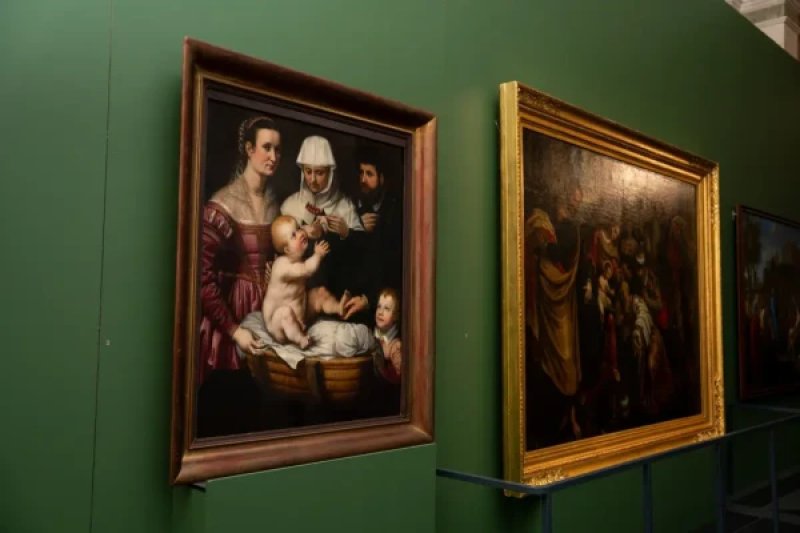
The main theme of the project is the cornucopia — an ancient symbol of material and spiritual well-being. The exhibition's authors invite visitors to view this metaphor more broadly and compare it to the museum itself, where visitors typically see only a small part of the vast collection, while a significant portion of the works remains in storage. The exhibition simultaneously raises questions about the role of the modern museum. What should be included in its collections today, for whom are exhibitions created, can almost any object eventually become a museum exhibit, and are there limits to the accumulation of cultural values? The choice of theme is also connected to the building of the Riga Stock Exchange itself. It was constructed in the mid-19th century, during a period of industrialization and rising prosperity. Images of the cornucopia are preserved both on the facade of the building and in its interiors. Over the following decades, the purpose of the building changed multiple times. It hosted events related to political power, various exhibitions were held, and in 2011, the Art Museum 'Riga Stock Exchange' opened in the historic building. The exhibition develops along two parallel lines. The first is dedicated to the symbolism of the cornucopia in different cultures and religions — from the ancient world and European Christianity to Asian art. The second invites reflection on the museum itself as a constantly evolving social institution. The story is told through paintings, graphics, sculptures, decorative and applied arts, and numismatics. The organizers consciously do not offer ready-made answers to all the posed questions, leaving space for discussion about the place of museums in a rapidly changing world. The project is interdisciplinary in nature. In addition to museum objects, texts and a special program of events play an important role. Museum specialists worked on the exhibition in collaboration with the team of the philosophical journal Tvērums and invited experts from Latvia, Greece, and Japan.
