

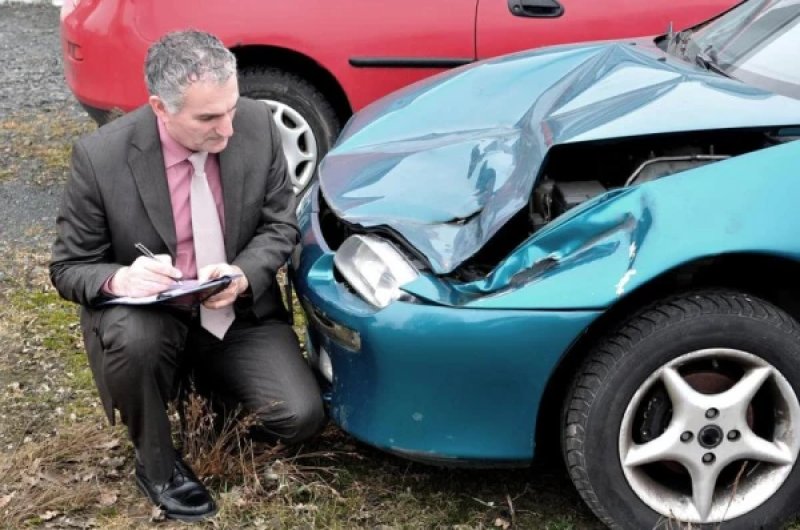
The main innovation for motorists seems quite practical. After an accident, the victim will be able to seek compensation not from the insurance company of the party at fault, as is usually the case now, but from their own insurer. The insurer will handle the settlement of damages and subsequent calculations themselves. However, this will not always work. One can turn to their own company if the damage was caused by a vehicle registered in Latvia. The insurer may send the victim back to the old route - to the company of the party at fault or to the Latvian Bureau of Motor Insurers: if it is impossible to establish the liability of the participants in the accident, if not only property was damaged but also a person's health, or if the total amount of compensation exceeds 50,000 euros. Kulbergs proposes to expand the possibilities for obtaining compensation in cases where the party at fault is completely unknown - for example, if a car was damaged and the perpetrator fled. Currently, the options for receiving money for material damage caused by an unidentified vehicle are severely limited. According to the Prime Minister's proposal, compensation could be paid, in particular, if the vehicle is damaged so severely that its permit to participate in road traffic is revoked. The rules are also changing for serious accidents. If at least one person sustained serious or moderate injuries in the accident, it is proposed to compensate the damages to all victims of that accident. Kulbergs has submitted his proposals for the third reading of the amendments to the OCTA law. If the Saeima supports them, the new order is expected to come into effect on January 1, 2027, and will apply to accidents occurring from that date onward. It is worth reminding that before entering politics, Kulbergs spent many years in the automotive business: he managed companies that sold cars, headed the Latvian division of Inchcape, and later the Auto asociācija, representing the interests of the automotive industry. As Prime Minister, the former automotive expert has at his disposal the entire country with its budget, roads, hospitals, schools, and railways - but upon seeing the opportunity to bring order to OCTA, he could not pass it by.
