

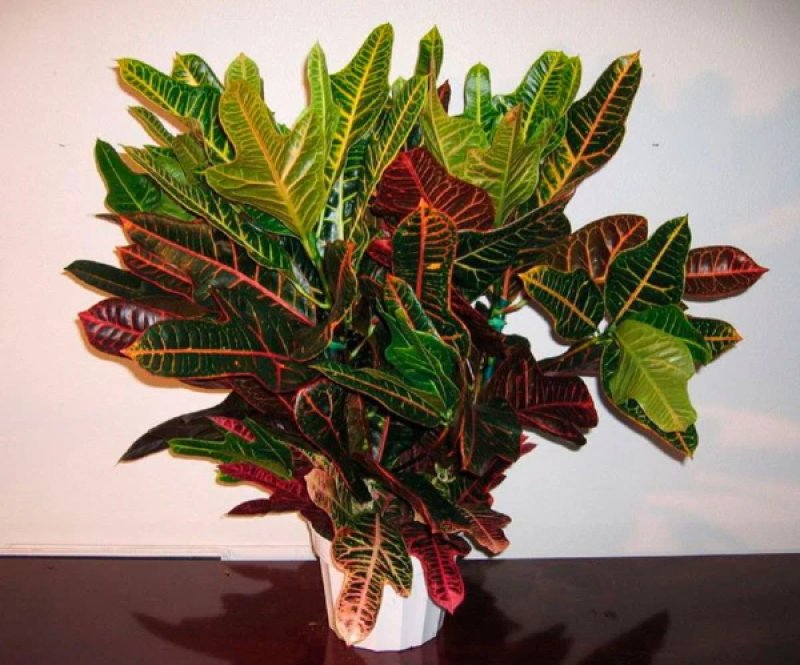
Houseplant expert Lisa Eldred Steinkopf notes that it is rarely appropriate to speak in categorical terms of "never" regarding plants. However, some popular species require such specific conditions that growing them at home can turn into a constant struggle. Experts have named seven plants that often pose challenges in home conditions. ### 1. Croton The bright, multicolored foliage makes croton a popular decorative plant, but caring for it indoors can be challenging. According to Lisa Eldred Steinkopf, croton requires good lighting and regular watering. If the plant dries out or does not receive enough light, it may start to drop leaves. It is especially difficult to provide suitable conditions in winter when the length of the day decreases. Dry indoor air can also contribute to the appearance of spider mites. ### 2. Most Palms Palms are associated with the tropics, which is why they can struggle to adapt to a typical apartment. "Palms thrive on your terrace, but when brought indoors, they attract spider mites and often scale insects," notes Steinkopf. Many species require bright light and high humidity. In conditions of dry air and insufficient lighting, the plants can weaken and become more vulnerable to pests. Chamaedorea elegans is considered less demanding than many other palms, but it still requires more attention than most hardy houseplants. ### 3. Fiddle Leaf Fig The fiddle leaf fig has long been a popular element of home decor, but it is difficult to care for. Expert Samantha Adler notes that the plant is often recommended for beginners, although in practice it can be quite temperamental. The fiddle leaf fig is sensitive to changes: it does not like frequent rearrangements, requires consistent watering, and needs adequate light. If the growing conditions are suddenly altered, the plant may respond by dropping leaves. ### 4. Bird of Paradise The bird of paradise can be a striking decoration in a spacious room due to its large leaves and unusual flowers. However, the size of the plant can become a problem. "They are extremely large, and it is difficult to grow them comfortably indoors if you do not have a lot of free space," says Adler. Bird of paradise requires bright lighting and stable growing conditions. Even with good care, a plant grown indoors may not bloom. ### 5. Some Ferns Ferns help create a feeling of a small home garden in the interior, but not all species are equally well-suited for indoor environments. According to Adler, some ferns produce a large number of spores that can become airborne and potentially create additional problems for people with allergies. As an alternative, one can choose species and forms with fewer spores. ### 6. Carnivorous Plants Venus flytraps and Sarracenia look unusual and often attract novice gardeners. However, providing them with suitable conditions in an apartment can be challenging. In nature, these plants grow in sunny, swampy areas and undergo a period of winter dormancy. For normal development, they require conditions that are difficult to replicate in a typical room. Therefore, Bex Clare Hamell, a houseplant care instructor and gardener, advises considering the need for a cold dormancy period even before purchasing such a plant. ### 7. Gift Plants A special category consists of plants that are often sold as gifts. Among them are chrysanthemums, miniature roses, hydrangeas, and azaleas. They are often purchased for home decoration, but many of these plants are better suited for outdoor cultivation and require a period of winter dormancy. According to Steinkopf, if the plant can be kept until it can be safely moved outdoors, it will be able to continue developing normally in suitable conditions. ### How to Choose a Plant for Home Before purchasing, experts recommend considering not only the appearance of the plant but also the conditions in your apartment. It is important to assess the amount of natural light, air humidity, available space, and the ability to provide the plant with the necessary dormancy period in advance. If there is little time for complex care, it is better to choose hardy species that can adapt to typical indoor conditions. In this case, the houseplant will be a joy to the eye rather than a constant source of trouble.
