

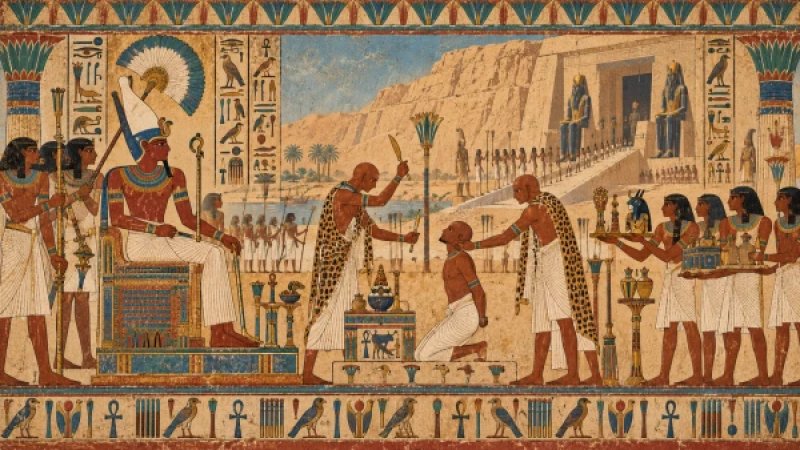
According to The Guardian, researcher Rosalin Campbell from Purdue University studied 46 skulls from burials located around the burial complexes of the kings Djer and Jet, as well as the queen Merneith. These remains are currently housed at the University of Cambridge. On 18 of the skulls, the scientist found injuries that could have been fatal. Among them were fractures, and in one case, a blunt force trauma to the eye area. Analysis showed that the injuries were likely inflicted around the time of the individuals' deaths. Campbell believes that the blows could have been delivered by wide flat objects made of wood or antler. This suggests that at least some of the individuals buried near the rulers were intentionally killed as part of the burial ritual. However, the researcher urges against drawing definitive conclusions. The sample studied is relatively small, so it cannot be claimed that such a fate awaited all servants and courtiers. Most of the examined skulls did not show characteristic injuries, but this also does not prove that these individuals died of natural causes. The theory of human sacrifices during the burial of the first Egyptian rulers has existed for about a century. As early as the 1920s, British Egyptologist Flinders Petrie, who studied these burials, suggested that servants might have been buried alive. Other scholars believed that courtiers died of natural causes, and their remains were later moved to the ruler's tomb. Campbell allows that Petrie may have seen fractures on the bones but considered them to be injuries that occurred after burial. The Umm el-Qaab necropolis is one of the most important archaeological sites of early Ancient Egypt. Its oldest structures date back to around 3000 BC. Around the tombs of the 1st dynasty rulers, archaeologists discovered hundreds of burials of people associated with the royal court: craftsmen, overseers, seal keepers, and other courtiers. However, the tradition lasted only a relatively short time. The number of such burials gradually decreased, and by the 2nd dynasty, they had seemingly almost disappeared. According to Egyptologist Salima Ikram, in later periods, real people in burial rituals were replaced by statuettes, which were meant to symbolically serve the deceased ruler in the afterlife.
