

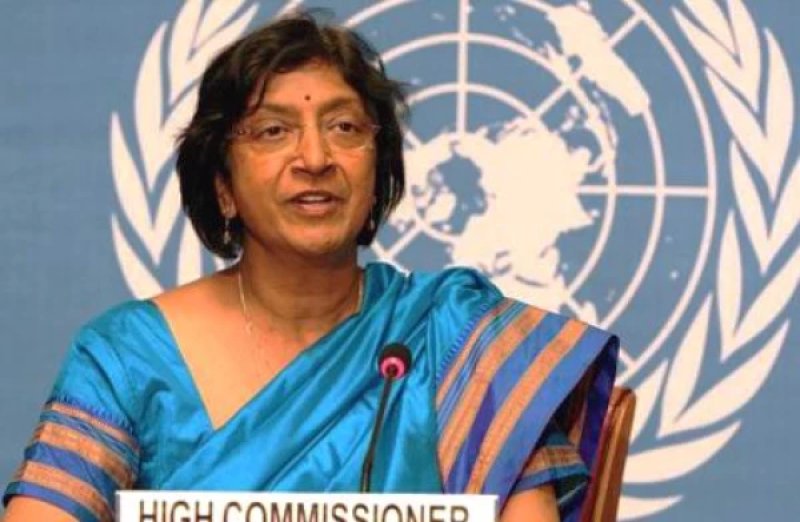
In its justification of the decision, the committee noted Pillay's role in holding accountable those responsible for war crimes, crimes against humanity, and genocide. According to the committee, her work has helped to enhance the capacity of international justice and strengthen legal mechanisms for conflict resolution. ## From the Fight Against Apartheid to International Justice Pillay was born in Durban, South Africa, to Tamil parents during the apartheid era. She became a lawyer and spoke out against systemic discrimination and racial inequality. Early in her career, she defended Nelson Mandela and other opponents of apartheid. Later, Pillay held judicial positions in South Africa, the International Criminal Tribunal for Rwanda, and the International Criminal Court. From 2008 to 2014, she served as the UN High Commissioner for Human Rights. Until recently, she also headed the Independent International Commission of Inquiry on the situation in the occupied Palestinian territory. Pillay is currently serving as a judge at the International Court of Justice in a case where Myanmar is accused of genocide. ## Role in Recognizing Sexual Violence as an International Crime One significant episode in her judicial career was her work at the International Criminal Tribunal for Rwanda. In the case examined, the court established that rape and sexual violence can be classified as crimes against humanity and genocide. Pillay also played a crucial role in a case where the accused was charged with incitement to genocide based on the dissemination of propaganda for the first time. ## The Nobel Committee Warned of Threats to International Law In announcing the laureate, the committee emphasized that international law is experiencing a period of serious pressure, and international institutions are facing attacks. According to the committee, the strengthening of power-based politics at the expense of legal mechanisms undermines stability, trust, and peaceful coexistence among states. The committee reminded that sustainable peace must be based on legal principles rather than the will of the strongest or a fragile balance of power. International law, they emphasized, is necessary for the peaceful resolution of conflicts and for holding accountable those responsible for serious crimes. Pillay's award, the statement said, is intended to remind of the importance of strengthening international legal institutions and protecting human dignity.
