

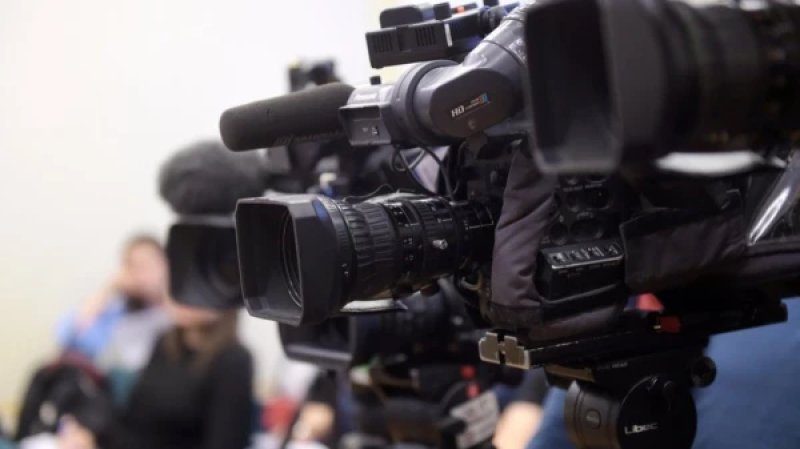
As stated in the association's declaration, commitment to media freedom should be demonstrated not only in declarations but also in the everyday work of politicians — in responding to uncomfortable questions from journalists, ensuring equal access to information, making budget decisions, and developing media regulations. ## Politicians Should Not Influence the Editorial Agenda The association reminds that deputies, upon taking office, promise to uphold the Constitution of Latvia, Article 100 of which protects freedom of speech, the right to receive and disseminate information, and prohibits censorship. "Society has the right to know how decisions are made and how the entrusted power is used, and it is the journalists' task to verify this, including identifying mistakes and asking questions that officials find uncomfortable to answer," emphasizes LAJ. According to the association, there should be a clear boundary between political power and the work of editorial offices. Politicians should not determine the editorial agenda, choose journalists that suit them, or dictate which questions are permissible to ask. It is also unacceptable to use funding, supervisory powers, state advertising, or appointments of officials to obtain favorable coverage of events or to punish the media for criticism. LAJ believes that references to national security should not serve as a cover for unjustified restrictions on freedom of speech and access to information. When appointing leaders and members of governing and supervisory bodies for the media, the main criteria should be professional competence and independence, not political loyalty. ## Public Media Needs Stable Funding The association calls for adherence to the principle of independence in the relationship between authorities and public media. Their funding should be sufficient, predictable, and protected from political pressure, allowing editorial offices to plan their work and development independently. LAJ also emphasizes that independent journalism is impossible without safe working conditions. The state must respond promptly to threats, harassment, and attacks on journalists, including online, ensure the protection of sources of information, and provide effective protection against SLAPP lawsuits — strategic lawsuits against public participation aimed at intimidating or suppressing public activism. Politicians are urged to avoid rhetoric that exacerbates hostility towards journalists. Constructive criticism of the media's work is acceptable; however, personal attacks, threats, and portraying journalists as enemies of society are unacceptable. "Officials must respond to questions in a timely manner and ensure equal access to information regardless of how critical the editorial office is," the statement reads. ## Media Support Fund Should Be Developed, Not Transferred to the Supervisory Authority According to LAJ, economically sustainable media capable of hiring professional staff are necessary for independent journalism. The association advocates for the development of the Media Support Fund (MAF) as a stable long-term tool for strengthening quality and regional journalism, media diversity, and the Latvian language. The distribution of funds, the organization believes, should be based on transparent and uniformly applied criteria, independent professional evaluation, and public justification of decisions. At the same time, LAJ does not support transferring the management of the fund to the National Electronic Media Council (NEPLP), as oversight of the media and distribution of funding should not be concentrated in the hands of a single institution. The association also calls for solutions to the problem of the influence of global digital platforms on the economic sustainability of Latvian media. In particular, it is proposed to assess the possibility of introducing a digital services tax and to ensure fair compensation for the use of Latvian media content on digital platforms and in artificial intelligence systems. ## New Regulations Should Protect Journalists LAJ believes that future media legislation should strengthen editorial independence, protection of sources of information, and the public's right to receive information. It should also comply with the requirements of the European Media Freedom Act. When defining the concepts of "media" and "journalist," the circle of individuals entitled to professional protection should not be unjustifiably narrowed, nor should freelance journalists be excluded or obstacles be created for their work that could be abused for political purposes. At the same time, the association advocates for the development of self-regulation in the media and mechanisms of professional ethics. Problems of journalism quality, LAJ emphasizes, should not be used as a pretext for political control over the content of publications. All decisions that significantly affect the work of the media should be made after timely consultations with journalists, editorial offices, professional organizations, and researchers — at a stage when it is still possible to influence the content of these decisions. In Latvia, the main directions of media policy for 2024–2027 and the plan for its implementation have already been approved. The association calls on the new Saeima and government to implement the planned measures, assess the results achieved, and agree in advance with the industry on the policy for the next period. LAJ expresses its readiness to participate in this work, present proposals, and provide professional assessments. At the same time, the organization promises to publicly oppose decisions and actions that threaten the safety of journalists, the independence of editorial offices, or the public's right to know. The association urges the 15th Saeima and the forming government to ensure conditions under which journalists can freely verify the work of the parliament and the cabinet of ministers without unjustified political, economic, or legal pressure.
