

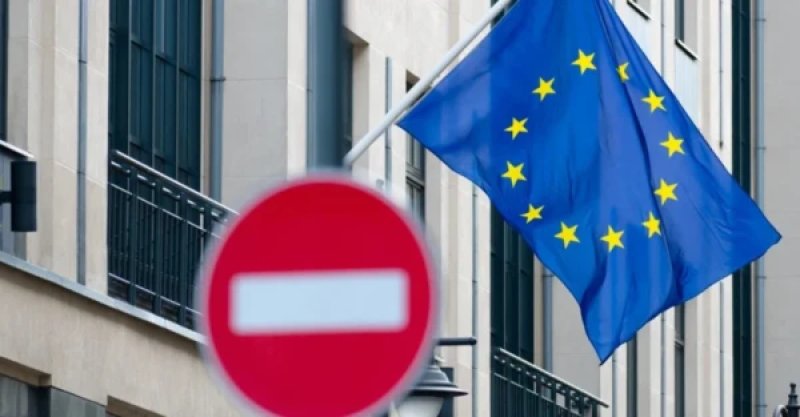
The European Union intends to tighten checks on Russian citizens applying for visas, including examining their military past, as well as unprecedentedly expand the sanctions lists against Russian individuals and entities. As reported by bb.lv, a senior representative of the European External Action Service (EEAS) announced this at a preparatory briefing in Brussels. "There is a strong interest in more thoroughly checking how many Russians can enter Europe," he stated ahead of the EU Foreign Affairs Council meeting scheduled for October 12 in Luxembourg. According to the diplomat, the EU plans to strengthen checks on Russian diplomats accredited to international organizations in European capitals, as well as to more closely examine the military backgrounds of visa applicants. "This is not about punishing the innocent Russian population, but about better protecting ourselves through visa tools," the EEAS representative explained. He noted that technical discussions on tightening visa rules have already begun and such measures enjoy political support. In his assessment, new restrictions could be introduced quite quickly, but specific decisions still need to be agreed upon with EU member states. ## The new sanctions list will include more than 1,600 individuals The EEAS representative stated that at the meeting in Luxembourg, ministers are expected to approve a new sanctions list that will include more than 1,600 individuals and entities. The restrictions will primarily affect individuals and organizations associated with the Russian military-industrial complex. The list is also expected to include 77 politicians linked to the elections to the State Duma of Russia in the occupied territories of Ukraine. Speaking about the effectiveness of sanctions pressure, the representative of the European diplomatic service expressed regret that the measures taken have not yet forced the Russian leadership to realize that Russia cannot win the war, and its continuation is costly for the country and its population. At the same time, he emphasized that sanctions limit Moscow's ability to continue military actions, including by putting pressure on the Russian military-industrial complex. ## The EU intends to close loopholes for sanctions evasion According to the diplomat, the European Union continues to fight against sanctions evasion, including through the so-called shadow fleet. Brussels aims to close new channels through which Russia obtains goods necessary for its military industry. The EEAS representative also noted that the Russian economy is experiencing negative consequences from isolation, and the costs of continuing the war for the country are increasing. The European Union is preparing to increase pressure on Russia in two areas — tightening visa checks and expanding sanctions against individuals and entities. Particular attention is planned to be paid to people with military backgrounds, Russian diplomats, and structures related to the military-industrial complex. At the same time, specific visa restrictions still need to be agreed upon with EU states, and the proposed sanctions measures must be approved. Brussels aims not only to complicate the entry of certain categories of Russian citizens but also to limit Moscow's ability to continue the war and evade existing sanctions.
