

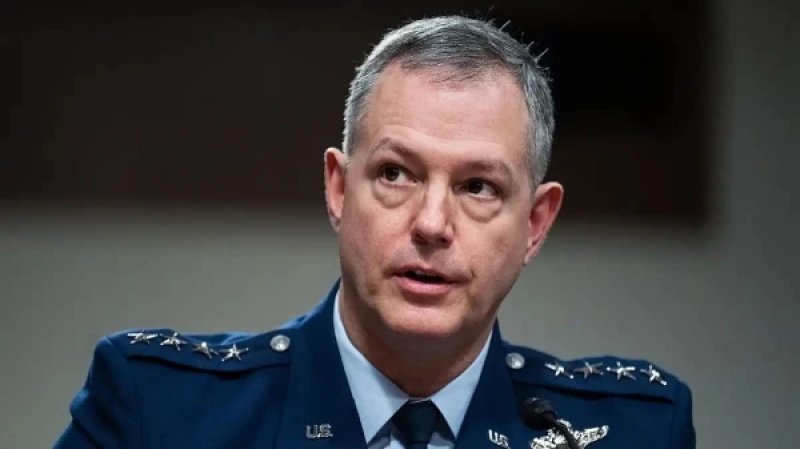
As [reported](https://nos.nl/artikel/2634678-hoogste-navo-militair-bij-aanval-vijand-tegenhouden-afzwakken-en-breken) by the Dutch broadcaster NOS, General Alexus Grinkevich outlined the alliance's strategy at the security summit in Warsaw. His speech was previously announced as a presentation of the "theory of victory" over Russia, although during the speech itself, the general did not mention Russia by name. ## “If someone is foolish enough to attack us, we will fight” Grinkevich clearly described NATO's course of action in the event of a military attack. "We will stop the enemy's attack, weaken it if it continues to advance, and ultimately incapacitate its operational combat system," the general stated. He emphasized that he hopes to never face the necessity of implementing such a scenario. According to the commander, his speech is primarily aimed at deterring a potential adversary and strengthening the confidence of allies. "At this moment, the conflict is neither inevitable nor imminent," he explained. Grinkevich reminded several times that the North Atlantic Alliance is a defensive organization. "But if someone is foolish enough to attack us, we will fight," the general warned. ## NATO speaks openly about victory strategy for the first time The public speech of the highest operational commander of the alliance explaining the strategy for conducting a possible war is quite an unusual event. Typically, such issues are discussed behind closed doors in military headquarters. However, this time NATO leadership decided to openly demonstrate the alliance's readiness to repel possible aggression. The speech took place against the backdrop of increased hybrid attacks against NATO member states, which are suspected to be linked to Russia. These include, in particular, sabotage and other actions aimed at destabilizing the situation and spreading panic. Such operations put NATO in a difficult position: to respond to provocations or to show restraint to prevent individual incidents from escalating into a full-scale conflict. In this context, Grinkevich's speech was meant to demonstrate that the alliance has a strategy not only for defense but also for defeating the enemy in case of an attack. ## “We will manage”: the general addressed a billion residents of NATO countries The American military leader paid special attention to the issue of trust in the alliance. During a conversation with summit participants after his speech, he stated that he wants to reassure the population of NATO countries. "I want to show all one billion residents of NATO states: we will manage," Grinkevich said, using the English expression *we got this*. He was also asked about the threats that keep him awake at night. The general's response was quite confident. "None. My job is to keep others awake at night," he stated. ## Zelensky had to hear conflicting signals However, the American general's speech came against a backdrop of ambiguous signals from Washington. Ukrainian President Volodymyr Zelensky was also present at the summit in Warsaw. As noted by NOS, just a few days before Grinkevich's speech, news emerged about the United States' plans to begin importing Russian oil and diesel fuel. It is assumed that such supplies are intended to help lower prices at American gas stations ahead of the midterm elections in November. Thus, on one hand, NATO's top military leadership demonstrates readiness to confront possible Russian aggression, while on the other, Washington is taking steps to expand energy trade with Russia. Additional tension is created by statements from U.S. President Donald Trump. According to NOS, over the past weekend, the American leader again sharply criticized Zelensky, stating that Ukraine needs a new president capable of reaching an agreement. Moreover, the publication claims that Trump threatened to halt arms supplies to Ukraine through NATO mechanisms. Previously, the U.S. president had repeatedly made statements that raised questions about the extent of American commitment to the North Atlantic Alliance. ## The U.S. is not going to abandon NATO, the general assured Amid these contradictions, Grinkevich specifically addressed the role of the United States in the collective defense system. The general, appointed to his position under President Trump, assured allies of the unwavering American commitments. "No one should have any reason to doubt the United States' commitment to this alliance," he stated. This statement became one of the key political signals of the speech. In fact, the American commander attempted to simultaneously address two tasks: to warn a potential adversary of the consequences of an attack and to convince European allies that the U.S. remains a crucial support for NATO. ## Deterrence instead of war Despite the harsh wording, the main message of Grinkevich's speech was not about the inevitability of military confrontation, but about the necessity of preventing it. According to NATO leadership's plan, a potential adversary must understand that an attack on the alliance will not bring it military victory. At the same time, the public explanation of the strategy is intended to demonstrate the allies' resolve and reduce the risk of miscalculations by a potential aggressor. For Latvia and other Baltic states, these statements hold particular significance. Against the backdrop of ongoing tensions on NATO's eastern borders, the words of the supreme commander represent a direct assurance of the alliance's readiness to defend its members. However, there remains a noticeable tension between military guarantees and conflicting political signals from Washington.
