

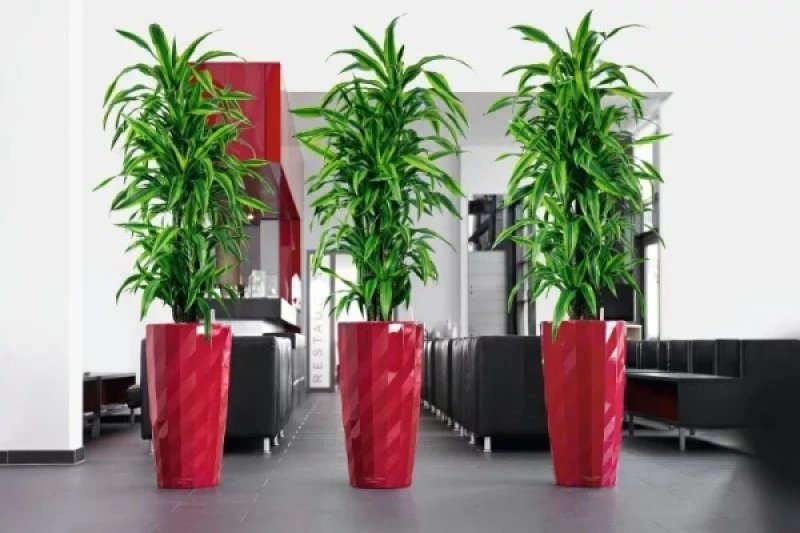
 Foto: BB.LV
Despite its fearsome name, the dragon tree, or dracaena, is a responsive and grateful plant that requires minimal care. It is recommended for those who want to have a “green friend” but do not have much experience in gardening. In this article, we will discuss what you should know if you have decided to tame your own dragon and get a dracaena. Why Such a Name The dracaena originates from Africa, but these trees also grow in South Asia and northern Australia. The word dracena translates to “dragon,” and the plant received this name due to an interesting feature: if you cut the trunk of large varieties of dracaena, a thick red sap resembling blood will begin to ooze out. This sap was once used in folk medicine as a remedy for fever (but it is not advisable to do so now). Dracaena Grows Well If you are attracted to a small green “umbrella” in a pot, keep in mind that dracaena can grow up to 2 meters tall. However, this is not a problem, as the dragon tree is quite unpretentious and will feel great in almost any corner of your home. Dracaena is forgiving to novice gardeners: it easily tolerates irregular watering, does not fuss if forgotten in a dark corner, responds gladly to any care, and generally behaves like an ideal green pet. How Much Light Does It Need The dragon tree is a very convenient houseplant, as it thrives in any lighting. However, it is best to avoid direct sunlight: despite the fact that it is quite hot in the dracaena's homeland, it does not like direct sunlight. A bright room, but not on the window, is ideal, and you can also place the dracaena in the shade: in this case, it will grow more slowly. How Often Does It Need Watering One of the wonderful qualities of these plants is their drought resistance. This means that if you forget to water the dragon tree, everything will be fine. Try to water your dracaena every 7–10 days (depending on the humidity level in your home). Make sure that water does not stagnate in the pot, as this can lead to root rot. What Temperature and Humidity Are Needed Although dracaena originated in Africa, it prefers humid air. Therefore, if your apartment is dry, occasionally mist the leaves with water or wipe them with a damp cloth. What Else to Know About Care Dracaena requires minimal care. Some old leaves may turn brown, but they can be easily removed without harming the plant. Since the plant grows actively, it is worth checking if it has become cramped in the pot: if you notice that the roots are sticking out, it is time to repot. However, do not choose a pot that is too spacious: despite the fact that dracaena can grow tall, its roots are usually not very long. Dracaena is a great “producer” of oxygen and destroyer of carbon dioxide. Therefore, it is ideal for cultivation both at home and in public places or offices. In spring and summer, during the growing season, fertilize the dracaena: in return, it will grow even more actively. How to Tell If Something Is Wrong with Your Dracaena * Leaves Are Falling If the leaves are yellowing or turning brown and falling off, you are likely overwatering. Allow the soil in the pot to dry out completely before watering again. * Root Rot This is a common problem with dracaena, and it can be avoided by checking the plant's soil before watering. If you notice soft or reddish roots, remove the plant from the pot, remove all the soil from the roots, trim any dead root parts, and repot in a new pot with fresh soil. Wait a few days before watering to give the plant time to recover. * Brown Spots on Leaves If your plant's leaves develop spots or brown tips, this may be caused by a number of reasons. One of them is that the dracaena is not getting enough water. You do not need to remove the entire leaf if there are only spots or a brown tip, but this may give the plant a chance to recover. Gently tug on the leaf; it will likely break off on its own.
