

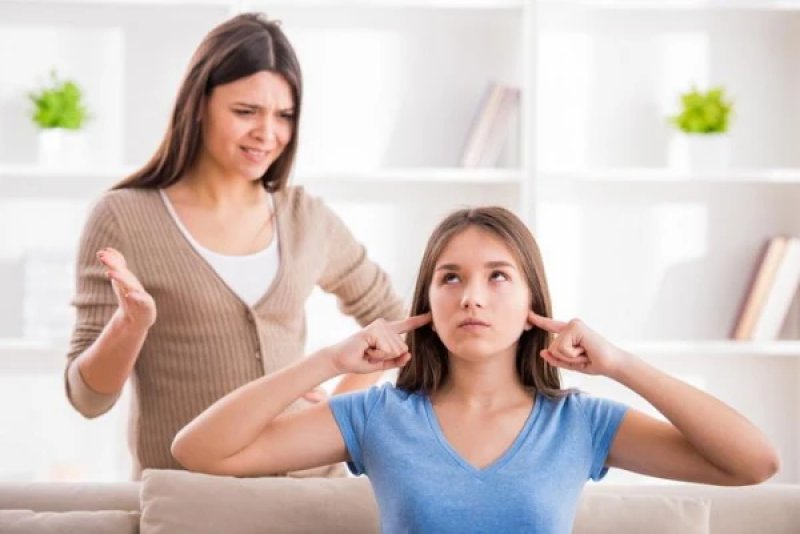
 Foto: BB.LV
“My 16-year-old daughter, a schoolgirl, constantly talks back to me. When I get upset and say I feel bad, she shrugs and says, ‘You’re imagining things.’ If I buy her something tasty and ask her to let me try it, she refuses but will offer it to dad and grandma a minute later. When I try to hug her, she screams, ‘Don’t touch me!’ I feel like she hates me, and I have no idea why.” Kira Protsenko, psychologist “No, she’s just coping as best as she can” Maximalism and Drama The teenage years begin around 12-13 years old and are associated with increased production of sex hormones. Research shows that the cause of heightened excitability and emotional instability in teenagers is the hormone THP - allopregnanolone. This hormone helps in stressful situations. During moments of intense psycho-emotional tension, THP is released into the bloodstream and interacts with GABA - gamma-aminobutyric acid, which is responsible for inhibitory processes. However, in teenagers, this process works differently: in stressful situations, THP is also released, but simultaneously, receptors that amplify negative emotions, such as anxiety, are activated. Thus, the dramatic and unstable emotional background of teenagers is a physiological phenomenon related to the peculiarities of their brains. Possible Reasons for Behavior At 16-18 years old, a teenager experiences the final stage of puberty, when the hormonal system has almost restructured. At this age, the self-image and desires are actively formed, and there is a desire to become independent. However, teenagers often do not take into account the feelings of their parents, who are not ready for their distancing. If puberty is delayed due to parental overprotection, it can lead to rebellion. Teenagers raised under pressure understand themselves worse and direct negative emotions towards those they are attached to. This is a natural process that helps them separate from their parents and transition to independent living. The third reason for behavior may be the daughter’s resentment over the lack of attention that she needs. It is important to consider whether you are communicating in different “languages of love.” You may be expressing your love in a way that is not perceived by your daughter. She may expect a different expression, even without realizing it. But you can help her with this! Languages of Love Touch, physical contact: People for whom this love language is important value hugs and touches. Help: This means that a person needs to feel support and assistance in everyday matters. Gifts: Even small gifts can bring joy to a person with this love language. Quality time: People feel loved when they spend time together. What Can Be Done Schedule a meeting with your daughter at a café. Agree in advance on a time that works for both of you, and discuss how to structure the conversation. For example, you can finish sentences like this: “It’s important to me that in our relationship we have such things…” “I feel happy when I/we…” “I feel sad if…” “I feel scared when…” “I get angry if…” “I feel proud when…” After you share about yourself, offer her: “And you?” Speak calmly and be prepared for disagreements. It is important not to assign blame but to find a solution that works for everyone. Your common goal is to hear each other. What if she refuses? If the teenager does not accept you, listen to her. Do not ignore your feelings. You can say: “Okay, but let’s meet and discuss everything when you’re ready. If you don’t want to talk, I can write you a letter or message.” Medical Opinion: The Brain is Just “Not Mature Yet” Overemotional behavior in teenagers is explained by the scientific fact of the predominance of white matter over gray matter in the brain. Gray matter is responsible for intellectual development, while white matter is responsible for connections between different brain structures. During adolescence, white matter begins to prevail, leading to the creation of new neural connections. This explains why teenagers are so receptive to new information and vivid sensations. It is important for parents to consider the peculiarities of the adolescent brain. Remember: it is worth expressing your thoughts through “I-statements” and talking about your feelings, avoiding accusations towards the child.
