

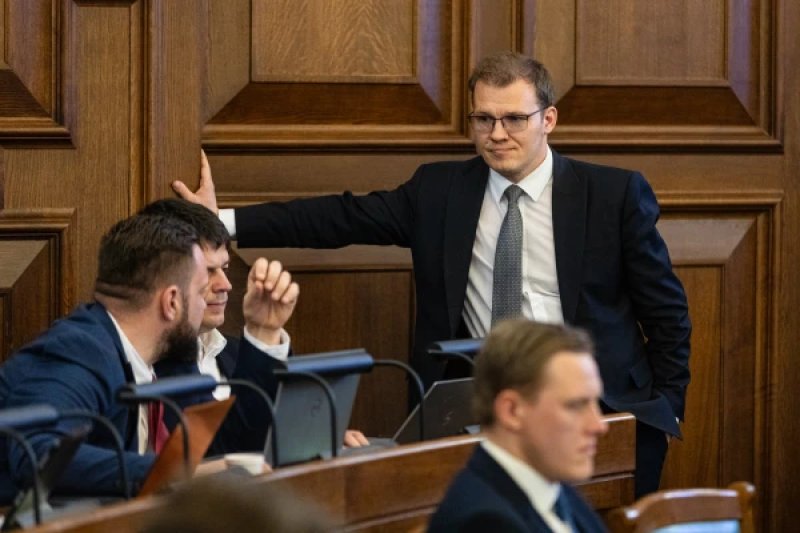
 Foto: BB.LV / Заседание Сейма
The second place in terms of payments was taken by Jānis Grasbergs (National Alliance), who received €5636.76. In third place was Raivis Dzintars (National Alliance) with a reward of €5280.30. Among the highest-paid deputies were also Artūrs Butāns (National Alliance), who received €5216.79, and Linda Matisone (United List) — €5216.55. More than €5000 in September was also received by Augusts Brigmanis (SZK) — €5145.42, Aiva Viksna (United List) — €5089.29, and Jānis Vucāns (SZK) — €5017.92. Andrey Yudin (New Unity) approached the €5000 mark with a payment of €4989.72, as well as Zanda Kalniņa-Lukaševiča and Agnesa Krasta (both from New Unity), who received €4948.80 each. Over €4800 in September was received by Guntars Kutris (SZK) — €4850.93, Raimonds Bergmanis (United List) — €4823.67, as well as Česlavs Batņa and Juris Vilium (both from United List), who were paid €4804.49 each. **How Deputy Salaries Are Composed** In 2026, the basic monthly salary of a Saeima deputy is €4330 before taxes. The remuneration of parliamentarians is paid from the state budget and is regulated by the Law on the Remuneration of Officials and Employees of State and Municipal Institutions. The amount of deputy salaries is automatically reviewed annually, taking into account changes in the average salary and inflation in the country. In addition to the basic salary, deputies may receive additional remuneration for performing certain duties in the presidium of the Saeima, parliamentary factions, committees, and subcommittees. However, no additional payments are provided for participation in Saeima and committee meetings, work in delegations, and deputy groups. Bonuses are also not paid to parliamentarians. Furthermore, deputies are compensated for expenses related to the performance of parliamentary duties. In particular, they may be eligible for compensation for housing rent and transportation expenses.
