

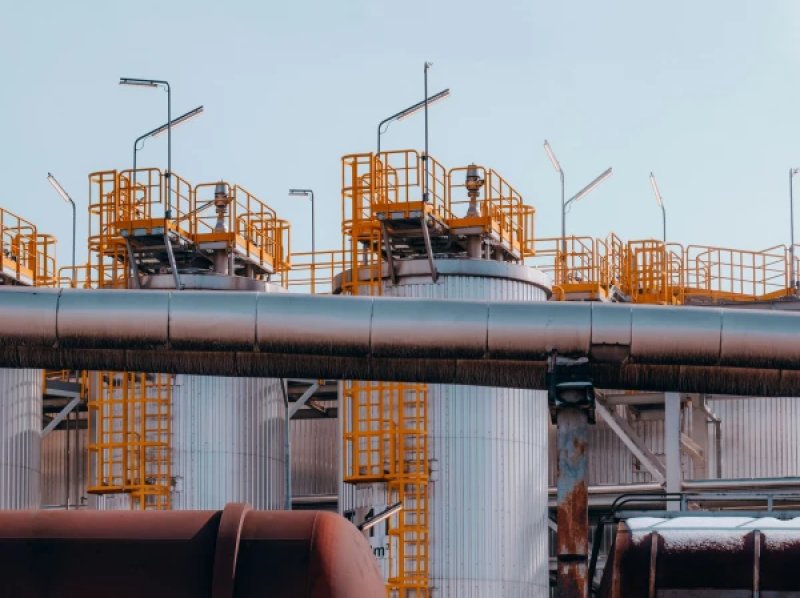
 Foto: BB.LV / Цистерны с дизелем
Anyone importing Russian diesel fuel into the U.S. will be violating federal law. This could lead to civil penalties of up to twice the value of the relevant transaction, as well as criminal charges that carry fines of up to $1 million and 20 years in prison. This was stated by U.S. Representative Jamie Raskin (Democrat from Maryland) in an open letter dated October 26. According to the legislator, a 10-year statute of limitations has been established. Raskin reminded that former U.S. President Joe Biden, acting under the International Emergency Economic Powers Act (IEEPA), prohibited the import of certain goods of Russian origin - including crude oil, petroleum products, fuel oil, natural gas, and related distillates into the U.S. ## ## Legislator: The Trump Administration did not follow this legally mandated procedure U.S. President Donald Trump officially announced on March 24 the extension of the national emergency declaration aimed at countering Russia's harmful foreign policy activities, directly maintaining the restrictions set forth in Executive Order No. 14066, noted Jamie Raskin. According to him, the Russian Oil Act establishes procedures that the president must follow before lifting the ban on the import of Russian energy resources. Thus, the head of state must present the U.S. Congress with written confirmation indicating both the intention to lift the ban and a conclusion that Russia has reached an agreement to withdraw its troops and cease military actions in Ukraine, has ceased to pose an immediate military threat to NATO members, and has recognized the right of the Ukrainian people to choose their own government. No later than 45 days before presenting this confirmation, the president is required to consult with the relevant committees of the House of Representatives and the Senate and submit a report justifying the relevant decisions, according to the open letter. Within a 90-day period, Congress may contest the decision by adopting a resolution on this matter. The Trump Administration did not follow this legally mandated procedure before issuing General License No. 135 from the Office of Foreign Assets Control (OFAC) of the U.S. Department of the Treasury, Raskin reminded. "President Trump is currently attempting to illegally circumvent the established U.S. embargo on Russian diesel fuel," the Democrat summarized. The legislator's message was sent to the American Petroleum Institute (API), the U.S. Chamber of Commerce, and the Association of Fuel and Petrochemical Manufacturers (AFPM). ## ## Trump's refusal of 'hellish' sanctions Earlier, on October 18, the head of the White House postponed the introduction of Lindsey Graham's bill, which proposed imposing additional tariffs of 500% on Russian goods and 100% on products from the top five major buyers of oil and gas from Russia, as well as those most actively helping Moscow evade sanctions. Prior to this, on October 9, U.S. President Donald Trump announced on Truth Social about a "highly successful" phone call with Russian leader Vladimir Putin, during which the politicians agreed on the supply of Russian diesel fuel "to the American and global market." Russian companies, Trump stated, would "immediately" ship more than 300,000 tons, another 500,000 tons in November, 1 million tons "right after that" (that is, apparently, already in December), and further, "depending on the state of the refineries," another 3 million tons. For its part, the U.S. Treasury issued a general license that suspends the effect of U.S. sanctions against Russian diesel until April 2027.
