

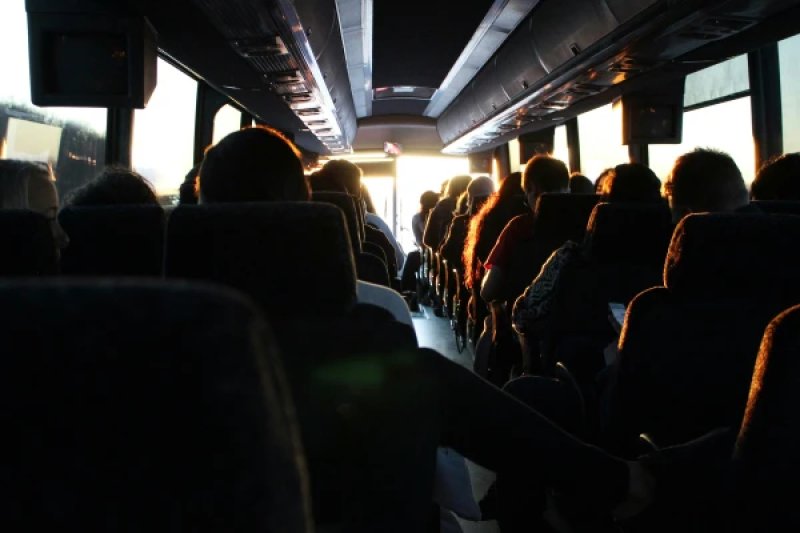
 Foto: BB.LV / люди в автобусе
According to him, on Thursday, an evacuation of residents from Latvia to Lithuania will be simulated along the Daugavpils–Pasvalis route, and on November 10, from Lithuania to Latvia along the Šiauliai–Kekava route. "This year, a detailed evacuation plan for residents has been approved in Lithuania, but it is equally important to test readiness in practice. In the event of a large-scale crisis, the evacuation of the population may cross state borders, so it is necessary to coordinate the actions of the agencies in advance," said Kęstutis Agintas, Deputy Director of the Fire and Rescue Department (DPO). According to him, these exercises will allow testing the cooperation between Lithuania and Latvia, assessing potential challenges, and preparing even better for real threats. On both days of the exercises, up to 100 volunteers will participate, who will be transported by buses across the state border. The aim of the exercises is to practically test the readiness of Lithuanian and Latvian agencies for the coordinated organization of the evacuation of residents in case of possible threats or large-scale crises. According to the scenario of the exercises, due to a growing unnamed threat in the Baltic region, a decision is made to begin a preventive, voluntary evacuation of priority population groups to the neighboring state. The entire evacuation chain will be tested during the exercises – from notification, registration, and transportation of the population to the transfer of responsibility at the border, reception of arriving populations, and ensuring basic needs. On November 5, participants in the exercises will travel from Daugavpils through Jēkabpils to Pasvalis. In Latvia, the collection, registration of residents, prioritization of evacuation, and transportation will be organized. After crossing the Lithuanian-Latvian border, participants from Latvia will be received in Pasvalis, where the procedures for registering incoming residents, providing food, and organizing temporary accommodation will be tested. On November 10, similar exercises will take place in the opposite direction – from Šiauliai to Kekava in Latvia. During these, the process of evacuating residents from Lithuania and their reception in the neighboring state will be tested. According to DPO, special attention will be paid to residents who may need additional assistance during the evacuation – persons with disabilities, families with young children, elderly people, and other vulnerable groups. The exchange of information between institutions, coordination of transportation, and provision of basic needs for people, including situations with power outages or communication services, will also be assessed. The challenges identified during the exercises and the collected information will be used to improve the cross-border evacuation procedures of Lithuania and Latvia, as well as to strengthen the readiness of responsible agencies to act in the event of a real crisis. DPO emphasizes that these are pre-planned exercises, unrelated to any change in the security situation or specific threats to the population. Volunteers will participate in the exercises, playing the role of evacuated residents. All actions will be carried out according to pre-prepared scenarios. The exercises are organized as part of the implementation of the joint Lithuanian-Latvian project "MassMovement: from strategy to security – joint efforts of Latvia and Lithuania to prepare for mass evacuation and enhance societal resilience."
