

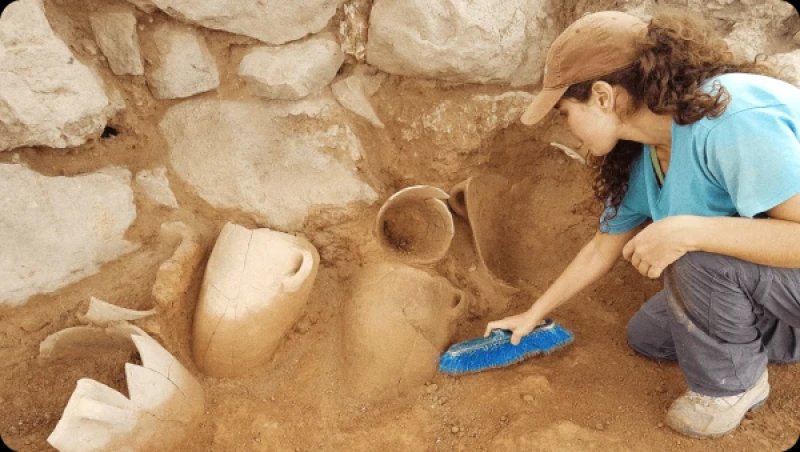
 Foto: BB.LV / Археологи обнаружили в Багдаде древнюю пивоварню и следы производства хлеба
The discovery was made at the archaeological site of Tell Muhammad in Baghdad. This area predominantly dates back to the era of the famous Babylonian king Hammurabi, approximately 2000–1600 BC. Researchers uncovered remnants of ancient defensive structures, two city gates, as well as a section that could have served as a kind of food production facility. A clay tablet with cuneiform text particularly piqued the interest of scientists. It mentions a person who received barley for brewing beer. The drink in question is presumably referred to as "kurun," which was known in ancient Mesopotamia. Professor of Archaeology at the University of Catania, Nicola Aneri, described the current excavation season as exceptionally successful. According to him, the discovered structures and written evidence suggest that this site was not only used for baking bread but also for brewing beer. At the same time, researchers are not rushing to make final conclusions. The deciphering of the found tablet is ongoing, and its complete translation may provide additional information about beverage production in ancient Babylon. Archaeological studies at the Tell Muhammad site have been ongoing since 2022. New discoveries are helping to reconstruct the daily lives of ordinary people, about which historians know significantly less than about rulers, wars, and palace constructions. Mesopotamia, located between the Tigris and Euphrates rivers, is considered one of the oldest centers of human civilization. It is here that the first cities emerged, writing, trade, and complex systems of governance developed. Bread and beer held an important place in the economic life of the region. Barley was one of the main agricultural products, and the production of beverages from grain was part of local traditions. Today, the archaeological site is gradually transforming into a historical space accessible to visitors. A new archaeological park has already been established on its territory. Iraqi specialists, together with international partners, continue to study and preserve the ancient structures. It is expected that further excavations will not only bring new discoveries but also aid in the development of cultural tourism in Baghdad.
