

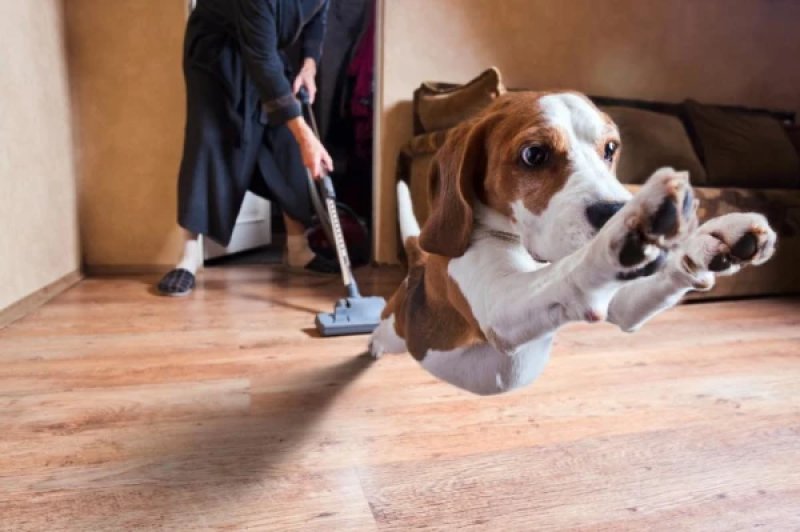
 Foto: BB.LV
The fur of pets grows in cycles: upon reaching a certain length, the hairs fall out, making way for new fur. The growth phase in animals lasts differently depending on the season. For example, some dog breeds, such as German Shepherds, Collies, and Samoyeds, shed more fur in spring and autumn as they transition from winter to summer coats. Therefore, at certain times of the year, there is more fur in the house. In addition to visible fur and food remnants, pets bring many micro-pollutants that are invisible to the naked eye. This can include dandruff, skin particles that dust mites love, as well as particles of dried saliva, urine, and feces that settle on various surfaces. These pollutants can be carried through the air along with household dust and settle in soft furnishings such as carpets and cushions. Clean Regularly If two working adults live in the house, cleaning can be done once a week, and then maintaining cleanliness can be done with minimal time investment. However, with a pet, especially during shedding periods, cleaning should be done more frequently — every two days. It is important to pay attention to corners and hidden places where animals may hide and leave food. How to make the home safe for health while continuing to live with a pet? Here are eight useful tips: 1. Brush Your Pet Regular brushing will help reduce the amount of fur your pet spreads around the house. Do this in the same spot, and then vacuum there using a mini electric brush to remove hair and skin flakes. 2. Clean from Top to Bottom Start cleaning from the upper surfaces and gradually move to the floor. Don’t forget about soft furniture, where fur and allergens may remain. A mini electric brush will help clean hard-to-reach places. 3. Wash Bedding and Covers Wash your pet's bedding and blankets at a temperature of 60 °C to eliminate allergens and microscopic skin particles. After washing, don’t forget to remove fur from the washing machine drum. 4. Vacuum Slowly Vacuuming slowly allows for better removal of deeply embedded fur. 5. Use Special Attachments Some vacuum cleaners come with bristle attachments that help “lift” fur from surfaces. In some cases, a lint roller can be used, but it won’t remove skin particles. 6. Vacuum Often Regular vacuuming will help prevent the accumulation of fur and dust. It is important to pay attention to both the floor and soft furniture. 7. Vacuum in Different Directions Vacuum the carpet in different directions to collect more fur. Two to three passes are usually sufficient. 8. Use Latex Gloves Put on latex gloves and run your hands over the furniture surfaces — the fur will stick to the gloves. Rinse them in water and continue cleaning. Keep Pet Areas Clean Bedding, houses, and cages for pets need regular cleaning to avoid unpleasant odors. Food bowls should be washed after each use, and the cat litter box should have its litter changed regularly and the tray cleaned. It is also important to monitor the aquarium, which needs to be cleaned of residues and algae using only clean water. Helpful Tips for Maintaining Cleanliness At the entrance of the apartment, you can place a soft mat to catch moisture. Dirty paws can be wiped with a special towel kept by the door. If there is a lot of dirt outside, you may need to wash your pet in the bathtub. It is also worth considering a waterproof dog suit that protects against dirt and cold. Regularly check your pets' fur for fleas and other parasites using pharmacy products. Maintaining cleanliness in a home with pets is a challenging task, but with the right approach and regular cleaning, it is quite achievable.
