

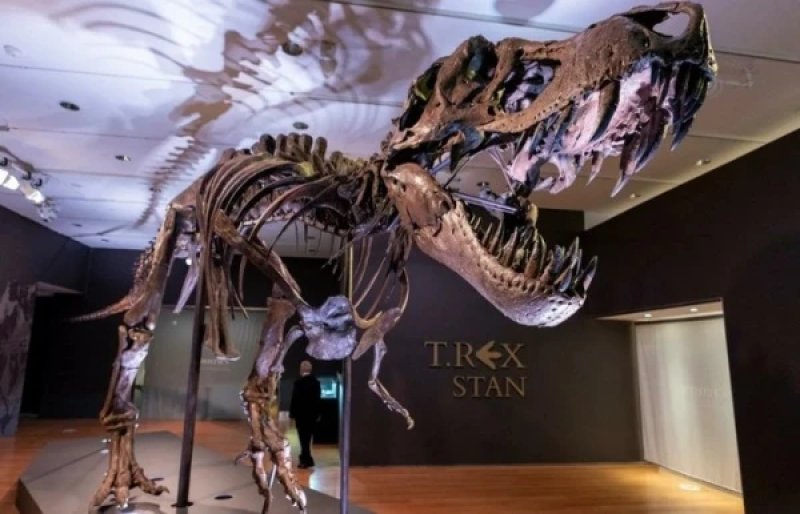
 Foto: BB.LV / За скелет «маленького тираннозавра» заплатили 42 миллиона евро: кто стал покупателем?
The fossilized remains of a dinosaur that lived about 67 million years ago were sold for 42.6 million euros. The initial estimated value of the lot was only 4–7 million euros. The bidding for the unusual exhibit lasted about 12 minutes. Buyers placed bids by phone and online, rapidly driving up the price. As a result, the winner was a private collector who wished to remain anonymous. According to the publication, scientists classify the discovered skeleton as a nanotyrannus—a small carnivorous dinosaur resembling a Tyrannosaurus rex. These ancient animals inhabited the Earth at the end of the Cretaceous period. Nanotyrannuses were about half the size of adult Tyrannosaurs, but they had a number of distinctive features. In particular, they had longer forelimbs with powerful claws and relatively thin, sharp teeth adapted for hunting. The sold specimen was nicknamed Jodie. Its remains were discovered in 2019 during a paleontological expedition. According to experts, the skeleton is about 70% intact. The length of the ancient predator reached nearly six meters, and its height was about three meters. The rarity of the find adds special value to it. According to the publication, scientists are aware of only three relatively complete skeletons of such dinosaurs. Before the auction, the remains were displayed for several weeks at Sotheby’s headquarters in Manhattan, where they attracted the attention of numerous visitors. However, the record sale has reignited discussions among scientists. Paleontologists are concerned that unique fossils are increasingly ending up in private collections and may become inaccessible for scientific research. Critics of such auctions argue that finds of such significance should be kept in museums and research institutions, where specialists can continue studying them and visitors can learn about the history of ancient life on Earth. At the same time, the question of whether nanotyrannuses were a separate species or juvenile specimens of Tyrannosaurus rex has long been a subject of scientific debate. This is why each well-preserved skeleton is of particular interest to paleontologists.
