

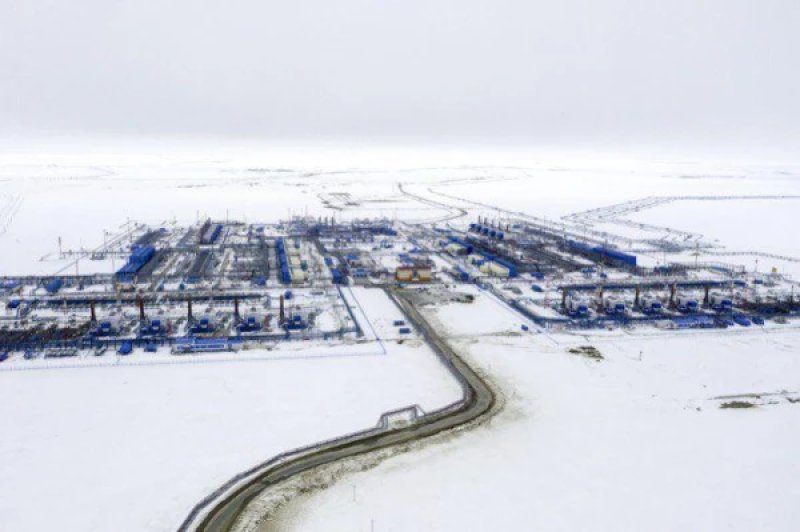
 Foto: BB.LV / Месторождение на Ямале
According to estimates by the environmental campaign group Urgewald, the European Union spent around €8.7 billion on Russian liquefied natural gas (LNG) from the Arctic in the first ten months of 2026, which is 21% higher than its estimated total for the entire year of 2025. While Brussels prepares to ban imports of Russian LNG starting January 1, 2027, European buyers continue to provide Moscow with a profitable market and replenish the Kremlin's "military fund," despite repeated political promises to end the bloc's dependence on Russian energy following the invasion of Ukraine. Urgewald analyzed data from energy analytics firm Kpler, which shows that EU ports received 12.89 million tons of LNG from the Russian Yamal LNG project from January to October, a 6.3% year-on-year increase. This volume accounted for 81% of the project's recorded global shipments. Europe remains the main customer of one of Russia's flagship Arctic gas projects, the Yamal-Europe pipeline, even though EU leaders have repeatedly stated their intention to end dependence on Russian fossil fuels. During this period, the EU received a shipment of LNG from Yamal approximately every 1.7 days. With only 50 days remaining until the ban on imports of Russian LNG under existing long-term contracts takes effect, EU purchases continue to grow. The increase in spending reflects not only higher volumes but also rising gas prices. Supplies in October decreased by 11% compared to September; however, their estimated value rose by 2.6% to €839 million, as the benchmark European gas price climbed to €86.79/MWh, more than double the level before the start of the US and Israeli war against Iran. ## ## France Leads France (5.37 million tons) became the main destination for October shipments, accounting for 70% of the volume delivered to the EU. Among the recipients of Russian Arctic LNG in October were also Spain (2.91 million tons), the Netherlands (1.32 million tons), and Portugal (0.22 million tons). Belgium (3.06 million tons) remained the largest individual destination when considering the first ten months of 2026: 42 shipments were unloaded in Zeebrugge, totaling around 3.1 million tons. According to Urgewald, no shipments from Yamal were recorded at the Belgian terminal in August, September, and October, although its significance for overall trade remains substantial. Alexander Kirk, who deals with sanctions at Urgewald, noted that a commercial partnership in LNG continues between the EU and the US, Norway, and Algeria. "We can stop importing Russian LNG on January 1. But simply changing suppliers still leaves European households vulnerable to gas price spikes and political pressure from abroad," Kirk told Euronews, calling for a broader use of clean technologies to reduce gas demand. "Every home we insulate or convert to a heat pump reduces gas demand. Every time wind or solar replaces gas in the energy system, Europe cuts emissions and deprives gas exporters of some of their influence." The upcoming ban could deal a serious logistical and commercial blow to Moscow, as the Arctic location of Yamal LNG makes access to European ports particularly valuable. The project relies on specialized Arc7 ice-class tankers that can navigate frozen waters, while European ports allow vessels to unload relatively close to the extraction site and return quickly. Without access to EU ports, Russia will face longer voyages, higher transportation costs, and fewer options for rerouting cargo, especially in winter when navigation along the Northern Sea Route becomes more complicated. According to Urgewald, the loss of the European market will undermine the economy of Russian Arctic LNG exports rather than simply redirecting existing volumes to other regions. ## ## EU's Plan for Energy Independence from Russia Stalls, Auditors Warn The largest recipients in the Asian market were China, South Korea, and Taiwan, which accounted for 18.6% of shipments from Yamal from January to October. Questions remain as to whether EU countries will adhere to the ban without exceptions or last-minute concessions, especially as winter approaches and concerns about energy security persist. Sebastian Rötters, who deals with sanctions at Urgewald, urged EU countries to "hold the line." "There are only 50 days left until the January ban, Europe must hold the line. No backtracking, no new exceptions, and no lifelines for this trade. After nearly five years of war, governments must finally cut off Russian LNG business," Rötters said.
