

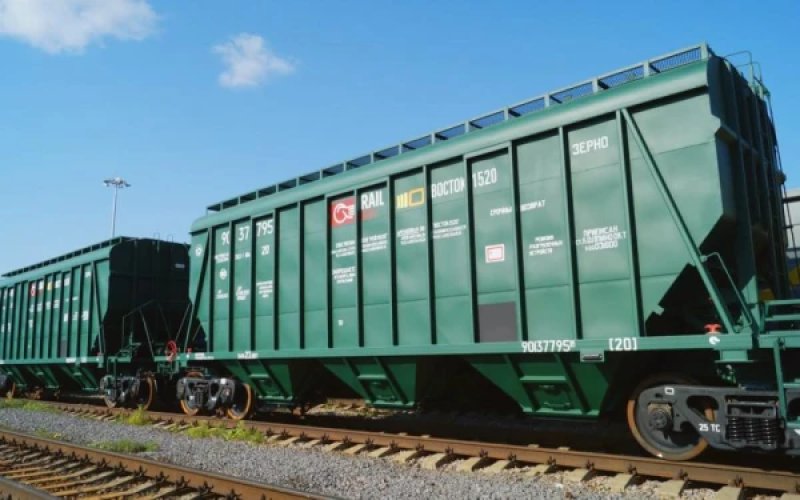
 Foto: BB.LV / вагон с зерном
Transit grain inspection in Latvia: initial tests did not reveal Ukrainian origin The results of laboratory tests on the first 28 samples of transit grain do not indicate Ukrainian origin. This was reported to the LETA agency by the Ministry of Agriculture of Latvia. According to the ministry, since September, the Food and Veterinary Service (PVD) has collected 50 samples of transit grain and sent them to the scientific institute Bior. All samples were sent for analysis to an accredited laboratory in France. As of now, results have been obtained for 28 samples. They were evaluated using the British reference database of the grain origin verification system. None of the tested samples indicated Ukrainian origin in the analysis results. ## ## How is the origin of grain determined? The reference database of the verification system covers 17 countries. It is maintained by the British Department for Environment, Food and Rural Affairs (DEFRA). The method used is based on the analysis of stable isotopes and chemical elements in the grain composition. These indicators reflect the climatic, geological, and ecological conditions of the area where it was grown. The Ministry of Agriculture emphasizes that determining the origin of grain in this way is a statistical assessment. Therefore, the results of laboratory studies should be considered together with the accompanying documents of the cargo, information on supply chain traceability, and other evidence. Latvia participates in the grain origin verification system in accordance with a memorandum of understanding signed between Ukraine, the United Kingdom, and Latvia. The system was created as an additional scientific tool for verifying the origin of grain. In particular, it is intended to help identify possible discrepancies in the declared country of origin of cargoes and risks of circumventing sanctions. The information obtained is transmitted by the PVD to the Customs Department of the State Revenue Service (VID) within its competence. The study of samples continues. Results for the remaining samples will be received gradually. Latvia is checking whether stolen Ukrainian grain is being transported through its territory. It was previously reported that on September 24, the Saeima urgently adopted amendments to the Law on the Circulation of Animal Feed. These amendments provide for border control of grain cargoes from third countries to prevent the transportation of cargoes stolen in Ukraine, including grain, through the territory of Latvia. ## Transit of Russian Grain Increased More Than Threefold Meanwhile, according to data from the State Revenue Service, in the first ten months of 2026, the transit of grain from Russia through Latvia increased 3.1 times compared to the same period in 2025. From January to October of this year, 1.115 million tons of Russian grain were transported through Latvia in transit. For the same period last year, this figure was 357,645 tons. An even sharper increase is observed in the transit of grain from Belarus. In the ten months of 2026, 185,756 tons of Belarusian grain passed through Latvia in transit, while in the same period last year, it was only 60.8 tons. Thus, the volumes of transit grain from Belarus increased more than 3000 times.
