

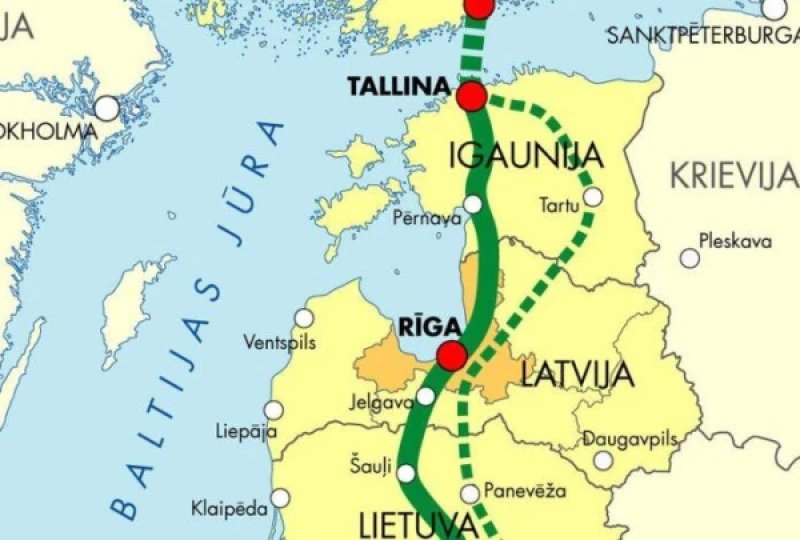
 Foto: BB.LV / карта Rail Baltic
Speaking at the conference of the Union of Infrastructure Construction Enterprises "Teedepäev 2026", Peltonen, who participated in the project analyzing the possibilities of building the tunnel, noted that these two megaprojects together will create a gateway to Europe, connecting Finland and Estonia even more closely with Central Europe and the Black Sea region. "The Tallinn-Helsinki tunnel is not just a transport project between two cities, but a missing link that will connect Finland's railway network with the rest of Europe. Rail Baltic will be a continuation of this connection and will expand opportunities for the movement of people and businesses," said Peltonen. According to the forecast scenario of the FinEst Link study, passenger traffic between Tallinn and Helsinki without the tunnel will grow to nearly 14 million trips per year, and with the tunnel — to 23 million. Of this number, 12.5 million trips will be made through the tunnel, and 10.5 million — by ferries. Thus, maritime transport will also continue to grow, facilitated by the development of the twin city and closer economic ties. Currently, about 60,000 commuting migrants travel weekly between the two capitals. According to Peltonen, the tunnel will contribute to the development of a common labor market and workforce mobility, as well as provide companies with broader access to the market of the neighboring country. The cumulative economic effect, estimated in the study at seven billion euros, includes, among other things, the benefits of workforce mobility and the development of the twin city. "The preliminary cost of the tunnel is estimated to be between 13 and 20 billion euros. Such a large range in estimates reflects the early stage of planning, and the amount will be clarified in the course of further work," noted Peltonen. According to Peltonen, the small scale of the economies of Estonia and Finland makes financing the project a challenging task. At the same time, the significance of this transport corridor will extend far beyond the two countries, connecting the transport network of Northern Europe with new markets. "Further advancement of the project requires firm commitment from the states and the European Union, as well as technical compatibility of the tunnel and Rail Baltica," emphasized Peltonen. "Russia's war against Ukraine and the closure of Finland's eastern border have increased the need for alternative transport links and supply reliability." In August, the authorities of Tallinn and Helsinki agreed to establish a joint working group to prepare for the implementation of the tunnel project.
