

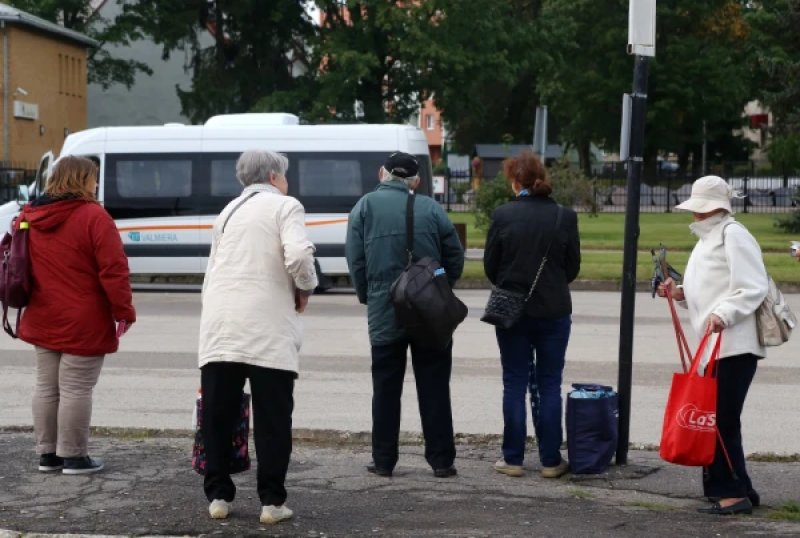
 Foto: BB.LV / Пассажиры
According to the LETA agency, the Ministry of Transport discussed possible options for financing public transport for the next four years with social partners. The ministry emphasized that no decisions have been made yet regarding changes to the benefits system. If such changes are approved, they will not take effect before mid-2027. Kaspars Berziņš, Deputy State Secretary of the Ministry of Transport, stated that revising benefits should only be considered as a last resort. He noted that it is necessary to ensure the financial sustainability of public transport without depriving residents of the opportunity to commute to work, educational institutions, and medical facilities. The ministry suggests paying special attention to socially vulnerable groups, for whom public transport is often not a matter of convenience but a vital necessity. ### Three options: from route reductions to maintaining benefits The Ministry of Transport, together with the Road Transport Administration, has developed three possible scenarios for financing regional public transport for 2027–2030. **First option — strict savings.** It is proposed to maintain funding at the current level. However, this would require significant reductions in regional bus routes and rail services, a substantial increase in ticket prices, and a revision of benefits. The ministry believes that this scenario would severely worsen the accessibility of public transport, especially in the regions. **Second option — tariff increases and benefit reductions.** It is proposed to maintain the existing network of bus and rail routes but to increase ticket prices by an average of 10%. At the same time, a revision of benefits is planned: the maximum state compensation for travel costs will be 70%. To implement this option, an additional 10 million euros per year will be required. **Third option — tariff increases while maintaining benefits.** This option involves keeping the current route network and the existing benefits system for travel. Ticket prices may also increase by an average of 10%. The additional expenses for the state budget will amount to about 15 million euros annually. **The Ministry of Transport considers the third option to be the most preferable**, as it will allow for the continued support of disadvantaged passenger categories and the accessibility of transport. ### Public organizations oppose benefit reductions During the discussion, representatives of public organizations expressed concern about the potential limitation of travel benefits. They urged, first and foremost, to seek additional funds in the state budget to maintain the existing support system. Participants in the discussion included representatives from the Latvian Association of Local Governments, the association of people with disabilities and their friends Apeirons, organizations Sustento, the Latvian Society of the Blind, Dzīvības koks, Terēze, Pilsēta cilvēkiem, as well as patient and other public organizations. The Ministry of Transport promises to take the received comments into account when preparing the final document. ### What else will change in public transport? Regardless of the chosen funding option, the authorities intend to continue modernizing the transport system. In particular, it is planned to develop cashless payments, implement a unified ticketing system, improve passenger flow accounting, and coordinate bus and rail services. There will also be closer integration of school transport and a review of the operation of bus stations. The ministry hopes that these measures will help increase the revenues of the transport system and use budget funds more effectively. Thus, the cancellation or reduction of benefits has not yet been approved. The Ministry of Transport proposes to maintain them in full, but the issue of increasing ticket prices for regional buses and trains remains open.
