

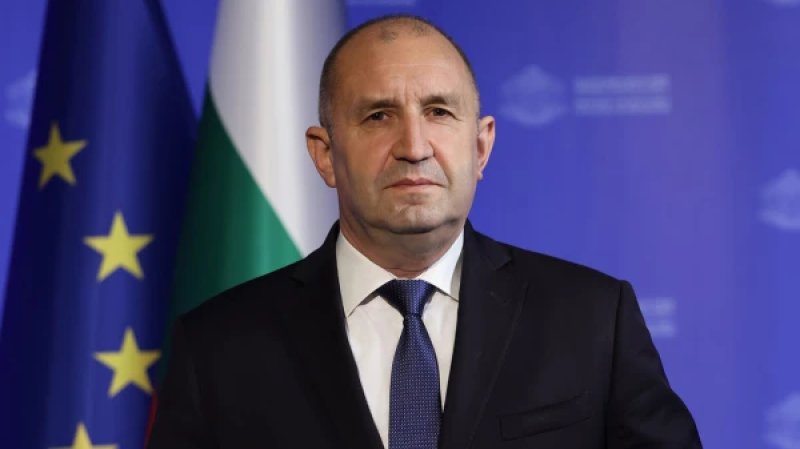
 Foto: BB.LV / Румен Радев
The Prime Minister explained the refusal of financial assistance by the lack of necessary reserves in Bulgaria, while the cessation of military supplies was attributed to the changing nature of the combat operations between the Ukrainian and Russian armies. At the beginning of the war, the Ukrainian Armed Forces needed Soviet-era weapons, and the Bulgarian side could help Kyiv in this regard and did so, but by 2026, drones had become the main weapon of the war, emphasized Radev. Bulgaria supports efforts to achieve a ceasefire in Ukraine and opposes the stance of 'peace from a position of strength,' added the head of government. Military assistance from Bulgaria played a crucial role in the first months of the full-scale invasion of Ukraine by the Russian Armed Forces. Sofia sent resources worth about $2.2 billion to the defenders in 2022–2023. Bulgarian supplies covered approximately 40% of Kyiv's needs for diesel fuel and 35% for Soviet-caliber shells. The support of pro-European centrist governments in Sofia allowed Ukrainian forces to hold out during a tense period while Western supplies were ramping up, noted Politico. However, the assistance to Kyiv coincided in Bulgaria with a period of domestic political instability, during which parliamentary elections were held eight times in five years due to governmental crises in the Balkan republic. As a result, in the next vote in April 2026, the leftist party 'Progressive Bulgaria' of former President Radev won. He became the first Prime Minister in a long time to form a government based on an absolute majority in the National Assembly. Radev's ally, Iliyana Yotova, won the presidential elections in Bulgaria on November 1. Radev initially positioned himself as a supporter of a peaceful settlement in Ukraine, negotiations with Russia, and the winding down of military assistance to Kyiv. However, the politician began to acknowledge in the fall that the Kremlin's hybrid operations in Europe were harming his country. 'We do not have strong and unequivocal evidence to make accusations against either side, but […] logic suggests that this outcome is beneficial to the Russian Federation,' Radev said to the Moscow ambassador after the drone attacks on cargo ships on October 13 in Bulgaria's territorial waters.
