

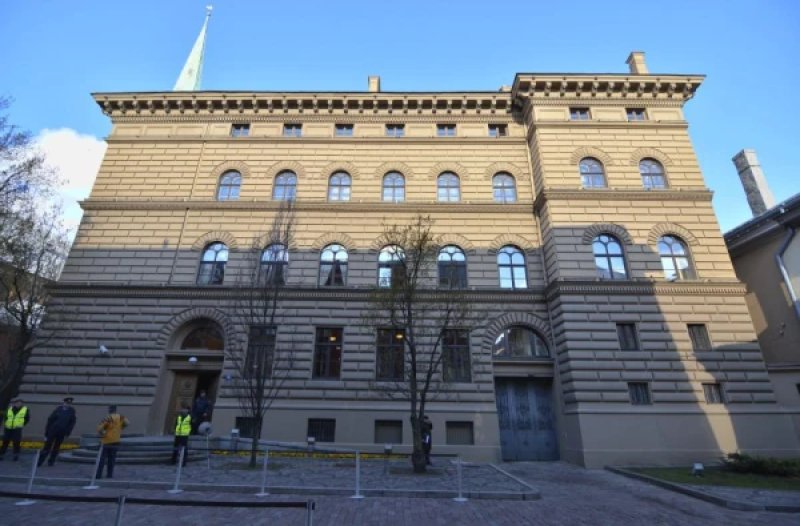
 Foto: BB.LV / Здание Сейма
A participant in the program expressed hope that the newly elected deputies of the Saeima clearly indicated their education — whether they actually studied at universities or attended various courses abroad. She acknowledged that well-educated people in parliament would certainly be desirable, but she believes that formal education is not the only criterion by which to assess a person's abilities. She reminded that a person without higher education can also be elected to the Saeima. According to the deputy, in her life she has encountered people who possess not only knowledge gained through education but also life wisdom. "Sometimes a homeless person by the church is smarter than some who sit in high chairs, so education is such a tricky question," noted the program participant. In the new 15th Saeima, 100 deputies have begun their work, and most of them have higher education. 95 parliamentarians have higher education, four have secondary education, and one has basic education. Among the deputies, the fields of economics, entrepreneurship, and management are most frequently represented — these areas account for about a third of all educational degrees and professional qualifications of the deputies. Alongside economists and entrepreneurship specialists, there are also lawyers, doctors, engineers, and representatives of the humanities in the Saeima. Seven deputies hold doctoral degrees, including in clinical medicine, history, political science, ecological engineering, and law. The parliament also includes less common professions such as a ship captain, conductor, and plant physiologist.
