

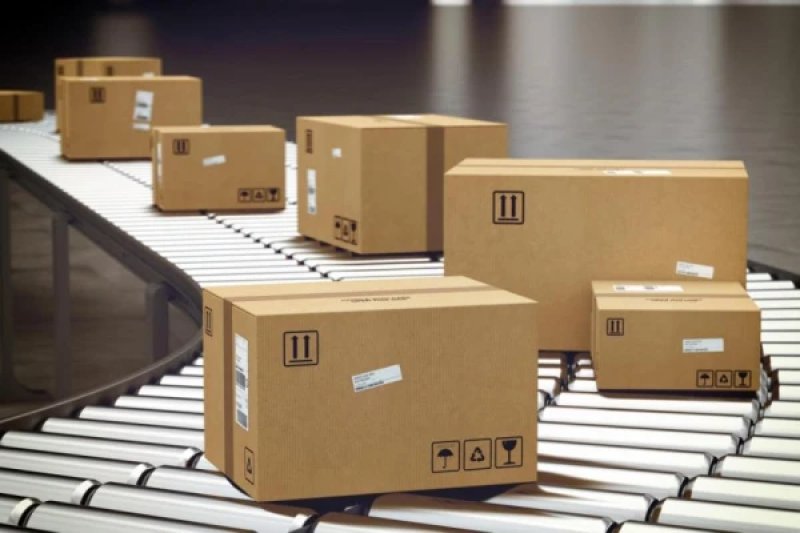
 Foto: BB.LV / посылки на конвейере
Recall that starting July 1, the European Union introduced a customs duty of three euros for each item in parcels valued up to 150 euros from non-EU countries. And starting November 1, an additional two euros was added for processing each item. For the buyer, this can be quite an unpleasant surprise. Suppose a person ordered a t-shirt from a Chinese website for four euros, socks for two, and a toy for three. The total purchases amount to nine euros, while additional payments add another 15 euros. And this is without taking VAT into account. Moreover, payment is required not for the entire parcel but for different categories of goods within it. If several identical items of one category are ordered, they can be counted as one item. But if a variety of small items are collected, the total quickly increases. The European Commission explains the new rules as a necessity to protect European sellers from unfair competition, combat fraud, and better control the safety of imported goods. However, for EU residents accustomed to buying inexpensive clothing, footwear, and household items directly from China, this means additional expenses. Shein has found a way out. The company imports goods from China to Europe in large batches, clears them through customs under regular rules, and stores them in warehouses in Poland. From there, individual orders are sent to customers. The difference is fundamental. When a parcel arrives directly from China, the new fees apply. But if the goods have already been imported into the European Union and cleared customs, their further shipment, for example from Poland to Latvia, is considered an intra-EU delivery. There is no need to pay the additional three plus two euros for each item. That is why the Shein website increasingly features the label "EU warehouse." As journalists from the Estonian Ärileht discovered, many products in the Estonian version of the store already have this label. Customers are promised delivery without additional customs fees. Of course, Chinese goods do not become completely tax-free as a result. Shein pays duties when importing large batches, and these costs can be factored into the price. But the buyer is relieved of fixed fees, which are particularly painful when ordering cheap small items. For the sake of the new scheme, Shein is significantly expanding its presence in Europe. On November 4, the company announced that it would invest another 500 million euros in a logistics center near Wrocław, Poland. Including previous investments, the total amount invested in Poland since 2022 will reach one billion euros. The area of the warehouses is expected to grow to about one million square meters — roughly the size of 140 football fields. Thousands of robots handle sorting and order fulfillment, and the workforce is planned to increase to 10,000 people by the end of the year. Another popular Chinese marketplace, Temu, is following the same path. It aims to ship more than 80% of European orders from local warehouses by the end of the year. For buyers, there is a simple guideline: before placing an order, it is worth checking where the goods will be shipped from. The label "EU warehouse" can mean not only faster delivery but also the absence of additional customs payments upon receipt. However, it is still necessary to compare the final price: a product in a European warehouse may not necessarily cost the same as when shipped directly from China.
