

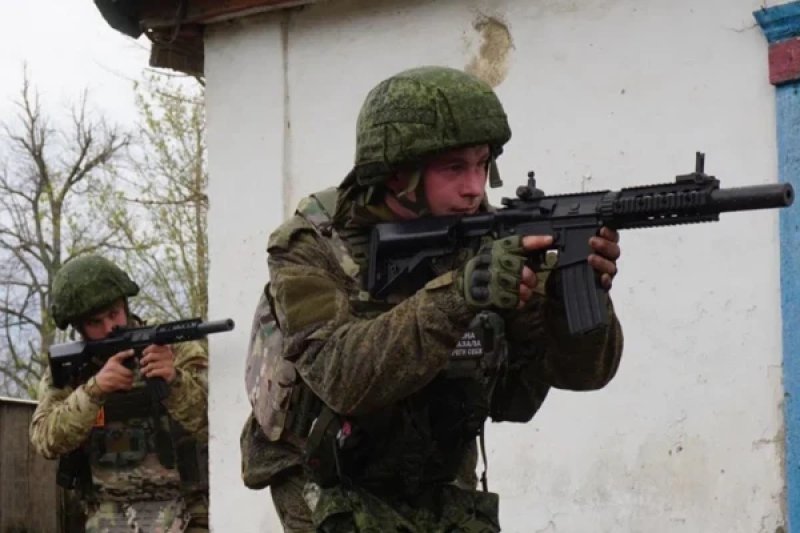
 Foto: BB.LV / Российские солдаты
"Russians have changed their infiltration tactics during the disastrous summer campaign to catch up with the maps they are following. By mid-October, Russian maps showed that they had captured five times more territory this year than [indicated by] DeepState," the analyst writes. According to him, not long ago, Russians were trying to actively defend during Ukrainian counterattacks, but now their small infantry groups simply penetrate as far as possible into Ukrainian positions, avoiding any fire contact. Monstas calls this model a 'passive-aggressive offensive': the occupiers attempt to disperse as much as possible, establish themselves in the terrain, and survive as long as possible, provoking Ukrainian forces to attack them on their own. Drones play an important role in this tactic. Due to their effectiveness, traditional assault groups have become too costly for both sides, so Russians prefer small units that try to remain hidden. At the same time, Ukrainian drones are also actively identifying and destroying such groups. "This is an interesting strategy that creates incredibly deep gray zones on Russian maps, which do not reflect real control over the territory," the author concludes. Monstas also questions the ultimate effectiveness of this approach, but emphasizes that it requires unconventional thinking and complete disregard for human life.
