

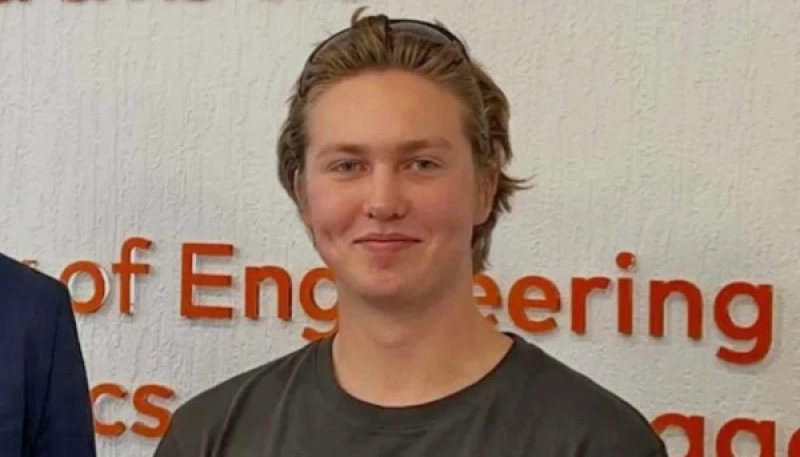
 Foto: BB.LV / Хенрийс Дандзбергс
The young entrepreneur was funded by the well-known American startup accelerator Y Combinator. As Wired notes, Dandzbergs could become one of the youngest founders in the defense technology sector. Despite his young age, Henrijs already has considerable experience in technical development. In his childhood, he lived in various countries — Indonesia, Australia, and Spain. During the Covid-19 pandemic, his family returned to Latvia. The teenager studied at Astra Nova — a school associated with the educational initiative Ad Astra, founded by Elon Musk. Henrijs showed an interest in technology at a fairly early age. He engaged in robotics, constructed a bionic hand, worked on systems for drones, and experimented with space technologies. His interest in defense development was prompted by the full-scale war of Russia against Ukraine. According to the entrepreneur, he wants to create technologies capable of protecting Latvia, other European states, as well as Ukrainian and American military personnel. The main goal of Polemos Industries is to develop relatively inexpensive high-precision rockets with an intelligent control system that can operate effectively even in conditions of electronic warfare. The company aims to make hitting military targets significantly less costly. However, the ambitious plans of the 16-year-old entrepreneur initially raised doubts even among experienced investors. Dandzbergs' mentor at Y Combinator, Harj Taggar, admitted that he initially viewed the teenager's capabilities with skepticism. His decision to leave school for business was also discussed. Nevertheless, investors believed in the project's prospects, and Polemos Industries was accepted into the fall 2026 Y Combinator program. At the same time, the development of autonomous weapons raises serious ethical questions. Experts warn of the risks associated with potential artificial intelligence errors, the consequences of using such systems, and the accessibility of such technologies. The Wired article includes the opinion of Fergus Mackenzie-Wilson, who founded a military drone manufacturing company at the age of 20. He believes that young developers do not always fully understand the consequences of creating weapons. Henrijs himself is convinced that autonomous systems will inevitably become an important part of military technologies in the future and intends to participate in their development.
