

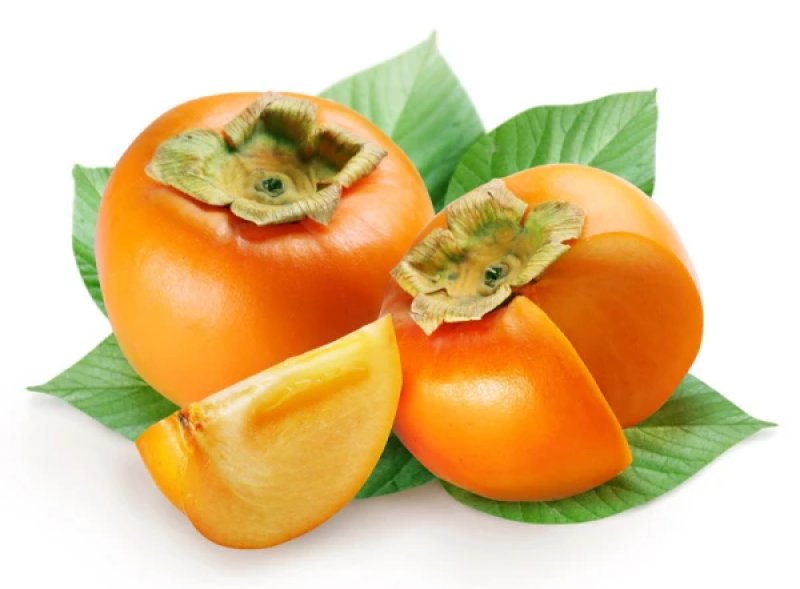
 Foto: BB.LV / Хурма
As the French publication [Linternaute](https://www.linternaute.com/sante/id/11315689-article-avantages-kaki/) notes, persimmons have a whole range of beneficial properties: they help maintain digestion, heart and vascular health, as well as the normal functioning of the immune system. ### Where Persimmons Come From Persimmons are sometimes called Japanese apricots. Their homeland is East Asia, primarily China and Japan. Today, this fruit is grown in many countries around the world. There are more than 3000 varieties of persimmons. Some varieties can be eaten even when firm, while others become sweet and pleasant to taste only after full ripening. The persimmon season usually lasts from September to December, which is why it becomes especially popular in late autumn. When buying, it is important to pay attention to the appearance of the fruits. The skin should be intact, without damage, and the fruit itself should be sufficiently firm if it is a variety that can be eaten while firm. However, persimmons have one peculiarity: some varieties contain a lot of tannins when unripe, which can cause an unpleasant astringent sensation in the mouth. Such fruits are better left to ripen at room temperature until the flesh becomes soft and sweet. Ripe persimmons are recommended to be stored in the refrigerator for no longer than two to three days. ### Five Beneficial Properties of Persimmons ### 1. Helps Protect Cells from Aging Persimmons contain vitamin C and carotenoids, including beta-carotene. These substances have antioxidant properties and help protect the body's cells from damage related to oxidative stress. Antioxidants play an important role in maintaining skin health and the normal functioning of the immune system. Due to their bright orange color, persimmons are particularly rich in plant pigments that participate in protecting cells from the effects of free radicals. ### 2. Improves Digestion One of the main advantages of persimmons is their high fiber content. According to French nutritionist Jean-Michel Cohen, 100 grams of the fruit contains about 3 grams of fiber. It promotes normal bowel function, helps maintain regular stool, and can be beneficial for people prone to constipation. In addition, persimmons contain water, which also positively affects digestion. However, people with a sensitive gastrointestinal tract should not overindulge in this fruit: a large amount of fiber can cause bloating and discomfort. ### 3. Supports Heart and Vascular Health Persimmons contain potassium—a mineral necessary for the normal functioning of the heart, muscles, and nervous system. Potassium helps regulate water and salt balance and supports normal blood pressure. Regular consumption of potassium-rich foods as part of a balanced diet can be beneficial for the cardiovascular system. However, persimmons do not replace medications for high blood pressure and are not a standalone treatment for hypertension. ### 4. Provides Energy to the Body Persimmons are noticeably sweeter than many common fruits. In 100 grams, there are about 12.5 grams of sugars, and the energy value is approximately 69 kilocalories. Thanks to their natural sugars, they can be a convenient snack, especially before or after physical activity. This fruit is suitable for a varied diet for children, the elderly, and those who lead an active lifestyle. However, people with diabetes need to consider the amount of carbohydrates and portion size. ### 5. Beneficial for Vision and Skin The orange flesh of persimmons contains carotenoids, some of which the body can convert into vitamin A. This vitamin is essential for normal vision, maintaining skin health, and the health of mucous membranes. In addition, persimmons contain vitamin B9, known as folic acid or folate. In 100 grams of the fruit, there are about 22.1 micrograms. According to the French Agency for Food, Environmental and Occupational Health & Safety (ANSES), vitamin B9 is necessary for the body, particularly for the formation of genetic material in cells. ### How to Properly Eat Persimmons The simplest way is to cut a ripe fruit in half and eat the flesh with a teaspoon. Persimmons pair well with natural yogurt, cottage cheese, nuts, and oatmeal. They can be added to fruit salads, smoothies, homemade baked goods, and compotes. This fruit is also suitable for savory dishes. For example, slices of persimmon can be baked and served with poultry or used in a salad with greens and soft cheese. It is important to consider the variety: soft persimmons are easier to eat with a spoon, while firm non-astringent varieties can be sliced like an apple. Despite their numerous beneficial properties, persimmons are best consumed in moderation. For most healthy adults, one or two small fruits can be part of a varied daily diet. The main advantage of persimmons lies not in any one vitamin, but in the combination of fiber, minerals, and antioxidants. That is why this bright autumn fruit deserves a place on the table during the cold season.
