

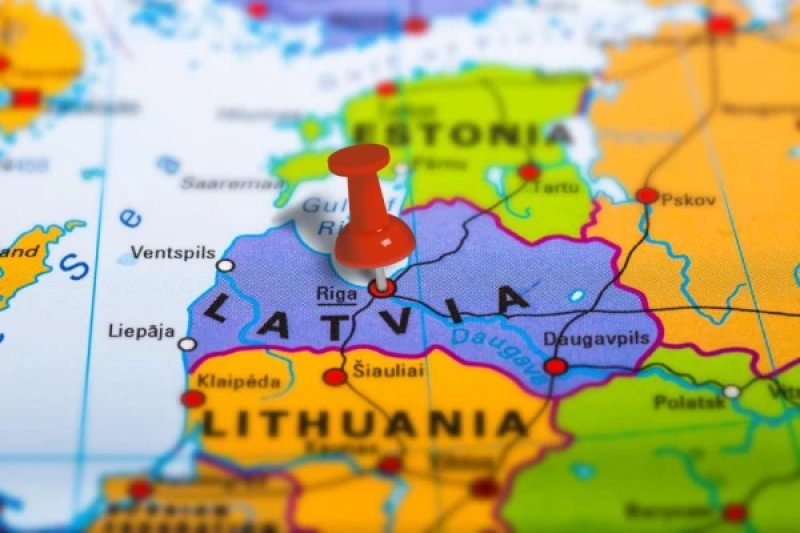
 Foto: BB.LV / карта стран Балтии
He reminded that the ministry he heads must submit an assessment of the administrative-territorial reform (ATR) to the Saeima by the end of this year. "Today we see that with the consolidation of municipalities, their administrative and economic capabilities have grown. At the same time, the reform in the regions has not eliminated fiscal disparities. It is very clear what is happening in the eastern border area, on the border with Lithuania compared to Riga and the Riga region. The differences in the economy remain enormous," said Tavars. The minister provided several examples of possible border revisions, such as the separation of the Ozolnieki region from the Jelgava region, which its residents desire. "We understand well: if we separate the Ozolnieki region from the Jelgava region, the situation for the rest of the region will worsen. It would be unreasonable without a clear alternative funding mechanism," noted the minister. The return to separate borders for the Marupe and Babite regions is also being discussed. It is possible that the South Kurzeme region, which united seven municipalities in 2021, could also be divided into two regions. On the other hand, the question of separating part of the Garkalne parish and joining it to the administrative territory of the Adazi parish has been removed from the agenda. "Both the Adazi and Garkalne regions have proven to be self-sufficient and quite viable; moreover, Garkalne is one of the wealthiest regions," said Tavars. The minister believes that decisions on border revisions should be made without haste, based on expert conclusions following the assessment of the reform. "This year I will not propose to restore any municipality to its former status. If we do this now, the harm will outweigh the benefits," concluded the minister.
