

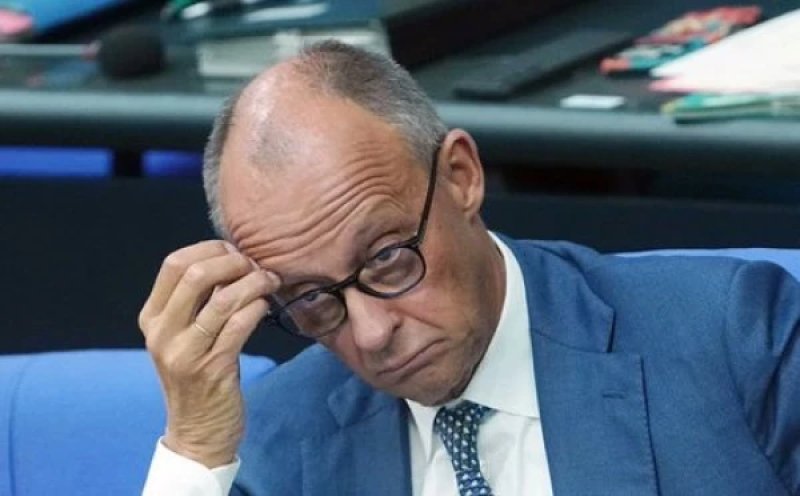
 Foto: BB.LV / Мерц
A special two-day summit of the leaders of the European Union countries to discuss the union's budget for 2028-2034, which opened on Thursday, November 26, in Brussels, concluded early after the first day. "We understand that we will not reach a result this evening," said German Chancellor Friedrich Merz at a press conference. According to him, the leaders of the EU countries still have significantly differing views on the seven-year budget. At the same time, the head of the German government "does not lose hope" that an agreement can be reached by the end of the current year. As a result, the dpa agency reports, EU leaders decided not to continue negotiations on the morning of November 27. Instead, the final round of discussions was held late on November 26. Merz noted that negotiations will resume at the summit on December 17-18. ## ## Germany Leads Group of Countries Opposing Increase in EU Budget Even before the summit began, Merz met with the leaders of six "net donor" countries of the EU budget, who oppose increasing spending. These include the Netherlands, Austria, Sweden, Finland, Denmark, and Belgium. During the summit, the German Chancellor also criticized the seven-year budget proposed on November 21 by European Council President António Costa, which amounts to €1.78 trillion—approximately €204 billion less than what the European Commission proposed in the summer of 2025. According to Merz, spending needs to be cut even further. The head of the German government also opposed financing at the European level through borrowed funds, as in 2028-2034, the member countries will have to pay interest on debts totaling over €150 billion. Further increases in debt could lead to the EU "losing its capacity to act," Merz believes. In addition, the German Chancellor called for a "fair distribution" of expenses and demanded the preservation of budget rebates that allow "net donor" countries to reclaim part of their contributions. "Germany contributes about a quarter of the entire European budget, yet we directly receive back only about 8% of those funds," he noted. ## ## "Frugal" Countries Face Opposition from Italy, France, and Poland The position of Merz and the leaders of other countries advocating for a reduction in the EU budget is, among others, opposed by the heads of Italy, Spain, France, and Poland. They, in particular, demand more funds to support economically weak regions and to develop agriculture. "We are not ready to sign a budget in which we contribute more but receive less," said Italian Prime Minister Giorgia Meloni. In her opinion, it will take "light years" to reach an agreement on finances. French President Emmanuel Macron called the further budget cuts proposed by Merz a "strategic mistake." At the same time, he urged reaching a financial agreement by the end of the year, as his participation in discussions will be complicated in the coming months due to the presidential elections in France scheduled for April 18. ## ## Merz on Financial Aid to Ukraine: There Are 27 Countries in the EU, Not 23 or 24 In addition to budget negotiations, the summit discussed further financial aid to Ukraine. In particular, it involves providing Kyiv with an additional loan of €45 billion in 2027. According to Merz, aid to Ukraine is "a task that we (the EU countries) must tackle together." The Chancellor emphasized that the union consists of "27 states, not 23 or 24." He pointed out that the Czech Republic, Slovakia, and Hungary are not participating in providing Ukraine with a loan of €90 billion for 2026-2027, which was finally agreed upon by the EU back in April.
