

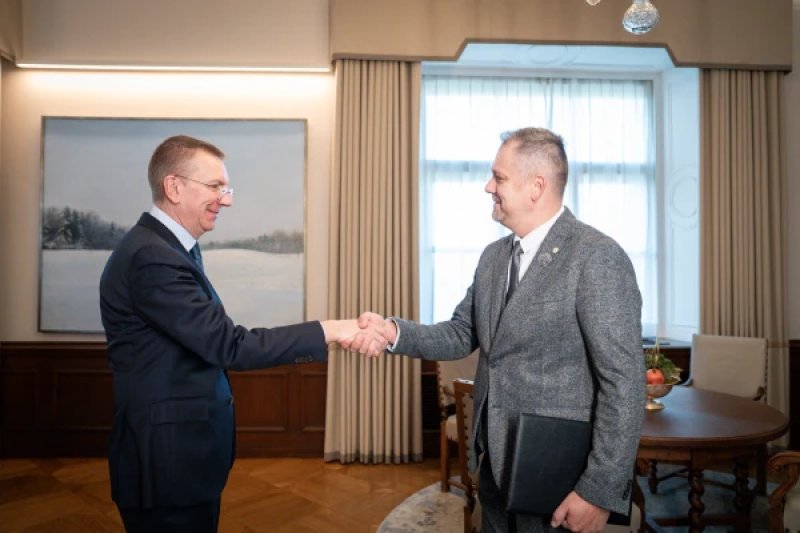
 Foto: BB.LV / Эдгарс Ринкевичс и Чеслав Батня.
The head of state made this statement on Friday, November 27, during a meeting at the Riga Castle with the new Minister of Education and Science, Česlavs Batņa ("United List"). ### The President called to maintain promised guarantees One of the main topics of the meeting was the funding of education for young people who voluntarily completed service in the National Defense Service (Valsts aizsardzības dienests, VAD). According to Rinkēvičs, the state must take into account the contribution of those who voluntarily chose to serve in the military and thereby took on the responsibility for the security of Latvia. The president emphasized that the issue of funding further education for these young people should be resolved through the joint efforts of the government and higher education institutions. At the same time, previously promised guarantees for volunteers should not be reduced. "The skills and experience gained during service are valuable both in the educational process and in future professional life. It is important for us that after service, these young people continue their education and build their professional future in Latvia," said Rinkēvičs. ### What the state promised to volunteers The National Defense Service was introduced in Latvia in 2023. Initially, it was carried out exclusively on a voluntary basis, as there were enough willing individuals to serve. The first mandatory draft with selection took place in 2025. For citizens who voluntarily enlisted for the 11-month military service of the National Defense, completed it, and were placed in reserve, a special educational guarantee is provided. State universities and colleges must offer such young people state-funded study places without competitive selection. However, to enroll, it is necessary to meet the established requirements of the specific educational institution and the chosen educational program. Thus, voluntary service grants the right to a budget-funded place, but does not exempt from fulfilling the general admission conditions. Now the government needs to find a solution that will ensure funding for these places while maintaining the guarantees provided to volunteers. ### Salaries of teachers and distance learning were also discussed The president's meeting with the Minister of Education was not limited to military service issues. As reported by the president's advisor, Mārtiņš Drēgeris, Rinkēvičs and Batņa discussed the main priorities of the new Cabinet of Ministers in the field of education and science. In particular, the discussion focused on teacher salaries — one of the important issues in educational policy. The president also listened to the minister's proposals for improving the regulation of distance learning. The parties paid special attention to the need to strengthen the quality control of such education. Specific decisions on these issues were not announced following the meeting. ### Youth should see their future in Latvia The president's position is that voluntary military service should open up additional opportunities for young people, rather than create obstacles to continuing their education. Rinkēvičs believes it is important that the knowledge and skills acquired in the army assist young people in obtaining a profession and subsequent employment. At the same time, the state is interested in ensuring that citizens who have served continue to study, work, and build their careers specifically in Latvia. Therefore, the issue of funding higher education for volunteers is viewed by the president not only as fulfilling previously made promises but also as part of a broader task — retaining young specialists in the country.
