

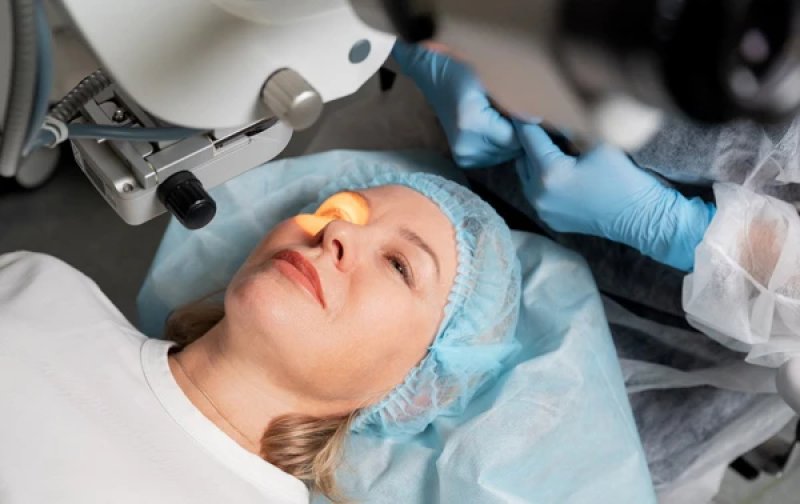
 Foto: BB.LV / Замена хрусталика
Modern surgery allows cataracts to be removed through a tiny incision, and artificial lenses can not only replace the cloudy lens but also correct some vision impairments. At the same time, the most expensive lens is not always the best choice. When is it really worth agreeing to surgery, how do artificial lenses differ, why do light circles sometimes appear in front of the eyes after the procedure, and how long does recovery take? Specialists discussed these issues during a roundtable organized by the publication "Doctor Peter." ### Why you no longer need to wait for cataracts to mature Just a few decades ago, patients were indeed advised to wait until the cataract matured. This was due to the peculiarities of old surgical methods: the cloudy lens was removed entirely through a fairly large incision. Today, the situation has changed. Modern technologies allow the operation to be performed much earlier, and prolonged waiting can sometimes complicate the procedure. Ophthalmologist Fyodor Rozhdestvensky explains that the main indication for surgery is no longer a specific visual acuity but rather how much the cataract interferes with a person's daily life. For example, a patient may still be able to distinguish letters on a vision chart quite well but experience serious difficulties when driving a car in twilight. They may be blinded by oncoming headlights, irritated by glare, or hindered by blurriness while reading or working on a computer. In such cases, surgery may be justified even if formal vision indicators remain relatively good. Moreover, as cataracts develop, the lens becomes denser and harder. During modern surgery, it is usually destroyed using ultrasound. The denser the lens, the more energy the surgeon may need. This increases the load on the inner layer of the cornea and raises the likelihood of postoperative edema. In advanced cases, a swollen cataract can also provoke an increase in intraocular pressure. Therefore, waiting for the disease to fully mature not only deprives a person of the ability to see normally but can also make the surgery technically more complicated. ### Even good vision on the chart does not mean the absence of problems Ophthalmologist Sergey Trufanov, Doctor of Medical Sciences, Professor, points out an important feature. Vision quality cannot be assessed solely by the number of lines a person can read on the chart. Other characteristics matter as well: the ability to distinguish contrasting images, perceive colors, see in low light, and tolerate bright light. Sometimes a patient reads eight or nine lines but experiences significant discomfort in everyday life. For example, they may find it difficult to navigate in the evening, and halos may appear around light sources. If the examination confirms that the cause of these problems is indeed lens clouding, surgical treatment can be discussed. Cataract surgeon Vasily Ivaskov also notes that at early stages, the surgery is usually technically easier. With mature cataracts, the surgeon may find it more challenging to work with a dense lens and prepare its capsule for the installation of an artificial lens. However, the presence of cataracts does not necessarily mean that surgery is urgently required. Maxim Timofeev, Candidate of Medical Sciences, vitreoretinal and cataract surgeon, emphasizes that a comprehensive diagnosis must be conducted before the procedure. After all, vision deterioration can be related not only to cataracts but also to diseases of the retina, optic nerve, cornea, and other structures of the eye. This affects how significant an improvement can be expected after surgery. ### Why vision sometimes unexpectedly improves with cataracts There is an unusual symptom that can mislead the patient. A person has used reading glasses for many years and then suddenly finds that they can again distinguish small print without them. At first glance, it seems that vision has improved. However, Vasily Ivaskov explains that such a change can sometimes be one of the signs of developing cataracts. As the lens becomes denser, its refractive ability changes. As a result, the eye may temporarily become more nearsighted. A person indeed finds it easier to read at close range, but this does not mean that the disease has receded. Cataracts continue to develop, and over time vision may deteriorate both near and far. Therefore, an unexpected improvement in the ability to read without glasses, especially in older age, is also a reason for examination by an ophthalmologist. ### Can cataracts be treated with drops? Many patients hope to avoid surgery and seek medications that can restore the lens's transparency. However, according to Sergey Trufanov, there are currently no drugs with proven efficacy that can eliminate an already formed cataract. In most cases, the disease is related to age-related changes. Proteins within the lens gradually change their structure, clump together, and form areas of cloudiness. As a result, the lens loses its ability to properly transmit light. To date, the only proven method for eliminating cataracts remains the surgical removal of the cloudy lens followed by the installation of an artificial lens. At the same time, scientists continue to search for ways to treat cataracts without surgery. Sergey Trufanov spoke about studies on thirteen-lined ground squirrels. During hibernation, the body temperature of these animals significantly decreases, and their lenses may temporarily become cloudy. After awakening, they become transparent again. Researchers are trying to understand the mechanisms of this reversible process and determine whether such biological features can be used in the development of medications for humans. However, practical application of such methods is still far off. The substances involved in restoring lens transparency can perform many other functions in the body. Therefore, intervening in one process should not disrupt others. ### How surgery is performed today The main modern method of surgical treatment for cataracts is called phacoemulsification. Its main advantage is that a large incision is not required to remove the lens. According to Vasily Ivaskov, the surgeon makes an opening approximately two to three millimeters in size. Through this, a special instrument is introduced into the eye, which uses ultrasound to break up the cloudy lens. Then its fragments are removed, and an artificial intraocular lens is installed in the freed space. Modern artificial lenses are soft and flexible. They are introduced in a rolled-up state, after which they unfold inside the eye. Usually, the small incision closes on its own, so stitches are not required. Anesthesia is most often performed using special eye drops. In uncomplicated cases, the procedure itself may take about 10–20 minutes. After a brief observation, the patient usually goes home the same day. ### How pilots and a dentist helped create modern surgery The history of artificial lenses began with an unusual observation by British surgeon Harold Ridley. During World War II, he treated pilots who had sustained eye injuries. In some cases, shards of plexiglass — a transparent plastic used to make aircraft cockpit canopies — ended up in the eye. Ridley noticed that the body relatively well tolerated the presence of such material. This observation helped him develop an artificial lens. The first implantation of an artificial lens was performed by the surgeon in London in 1949. The next important milestone occurred in 1967. American ophthalmologist Charles Kelman noticed an ultrasonic instrument during a visit to the dentist. He had the idea to use such technology to break up the cloudy lens directly inside the eye. Thus, phacoemulsification was born, which later significantly changed cataract surgery. Previously, patients had to stay in the hospital for about ten days, and recovery at home could take months. Today, most surgeries are performed on an outpatient basis, and the return to normal life occurs much faster. ### Why preparation for surgery is as important as the surgery itself Modern cataract surgery requires high precision. Not only the skill of the doctor but also the quality of preliminary measurements plays a significant role. Maxim Timofeev explains that before the surgery, it is necessary to determine the individual parameters of the eye to correctly calculate the optical power of the artificial lens. For this, special devices — optical biometers — are used. They allow measuring the characteristics of the eye necessary for lens selection. The accuracy of the measurements affects how closely the vision obtained after surgery will match the planned result. Modern equipment also assists during the procedure itself. Some systems allow the surgeon to see special navigation markings that facilitate precise manipulations. In certain cases, a femtosecond laser is used. It can perform some stages of the operation, including making incisions and preparing the lens. However, Fyodor Rozhdestvensky emphasizes that laser assistance is not necessary for every patient. It can be beneficial, for example, in cases of dense lenses or certain features of the eye's ligamentous apparatus. ### Which artificial lens is better to choose After cataract removal, an artificial intraocular lens (IOL) is implanted. Its optical characteristics largely determine at which distances a person will be able to see well and whether they will need glasses. At the same time, there is no universal lens that is equally suitable for everyone. Maxim Timofeev explains that the choice depends on the condition of the retina, cornea, optic nerve, the presence of astigmatism, glaucoma, and other diseases. Lifestyle is also very important. One person may need to read a lot and engage in handicrafts. Another spends most of the day in front of a monitor. A third drives a car daily, including at night. For each of them, the optimal lens may be different. In addition, some modern types of optics may not be suitable for all patients. For example, in certain retinal diseases or glaucoma, the installation of a multifocal lens may be undesirable. ### Monofocal lenses: clear vision, but glasses may be needed The most common option is a monofocal intraocular lens. It provides clear vision primarily at one chosen distance. Most often, it is calculated so that the patient sees well at a distance. However, reading and other near work usually require glasses. Vasily Ivaskov notes that the advantages of monofocal optics include high predictability of the result, good contrast, and the absence of additional light effects characteristic of some more complex lenses. Therefore, this option often suits people who drive a lot at night or work with small details in low light. However, not all patients want to see well at a distance. Sergey Trufanov gives the example of people with myopia who are used to reading without glasses and use correction for viewing distant objects. In such cases, a monofocal lens can be calculated for good near vision, preserving the need to use glasses for distance. The doctor himself mentioned that he has myopia of about minus three diopters, and if he needed surgery, he would likely prefer this option. According to him, a complex lens with multiple focuses does not always provide the quality of near vision to which a person is accustomed. ### Multifocal and trifocal lenses: can you forget about glasses? Multifocal artificial lenses are designed to reduce dependence on glasses. Trifocal models offer particularly wide possibilities. They distribute light among several focuses and allow seeing at different distances: far, medium, and near. As a result, the patient can read, use a computer, and navigate outdoors without constantly changing glasses. However, this technology has drawbacks. Vasily Ivaskov warns that in low light conditions, the contrast of the image may sometimes decrease. Additionally, light rings or halos may appear around bright light sources. They are especially noticeable around car headlights and street lamps. For someone who regularly drives at night, this can be a significant inconvenience. Over time, the brain often adapts to new visual sensations, and halos stop being a major concern. Usually, adaptation takes several months. But for a small portion of patients, adaptation may be incomplete, and light effects continue to interfere. Therefore, before choosing a trifocal lens, it is essential to discuss such features with the surgeon in advance. ### EDOF lenses: a compromise between clarity and freedom from glasses There is also an intermediate option — artificial lenses with increased depth of focus, or EDOF. Fyodor Rozhdestvensky explains that they provide a wider range of clear vision than ordinary monofocal lenses. A person can see well at a distance and at medium ranges. This is especially convenient for working on a computer, cooking, using a car's dashboard, and other everyday activities. At the same time, the intensity of light effects in some EDOF models may be less than in trifocal lenses. However, for reading small text up close, glasses are still often necessary. Therefore, this option may suit people who work a lot at a monitor, drive a car, and want to reduce their dependence on glasses but are not ready to tolerate pronounced halos around light sources. ### Toric lenses: when it is necessary to correct astigmatism A separate category of artificial lenses is designed for correcting astigmatism. These lenses are called toric. Astigmatism occurs when the optical system of the eye refracts light unevenly in different directions. As a result, the image may be blurry or distorted. Fyodor Rozhdestvensky explains that with a certain degree of corneal astigmatism, the installation of a toric lens significantly reduces the need for additional correction with glasses. Toric lenses can be either monofocal or more complex models. However, for a good result, the accuracy of installation is particularly important. Vasily Ivaskov emphasizes that the lens must be positioned strictly according to the calculated axis. Every degree of deviation reduces the effectiveness of correction by about 3%. When rotated approximately 30 degrees, the corrective effect practically disappears. Therefore, precise measurements and the correct positioning of the artificial lens are especially important for such operations. ### Why the most expensive lens is not suitable for everyone Modern artificial lenses can vary significantly in cost and technical capabilities. But specialists warn: a high price does not guarantee a better result. For example, in diseases of the central zone of the retina, multifocal optics can worsen the subjective quality of the image. Limitations may also occur with an uneven corneal surface, keratoconus, or after certain eye surgeries. Dry eye syndrome requires special attention. According to Vasily Ivaskov, it can distort the results of preoperative measurements and reduce vision quality after the procedure. Therefore, if necessary, dry eye is treated before surgery. Individual perception characteristics are also important. If a person is very sensitive to glare, halos, and even the slightest optical distortions, a multifocal lens may cause dissatisfaction, even when the surgery is technically performed flawlessly. Ophthalmologists advise patients to carefully consider their typical day before choosing a lens. For example, how important it is to read small print, work on a laptop, see a conversation partner's face across the table, distinguish instrument readings, or confidently drive a car at night. Patients often forget about the intermediate distance, although a significant part of everyday life occurs at this range. Maxim Timofeev emphasizes that the final choice should be a joint decision between the doctor and the patient. ### Can you completely give up glasses after surgery? Many patients hope that the installation of a modern artificial lens will allow them to forget about glasses forever. However, it is impossible to guarantee such a result even with the use of expensive trifocal models. Fyodor Rozhdestvensky explains that after surgery, a small degree of nearsightedness, farsightedness, or astigmatism sometimes remains. The deviation from the planned result can be about half a diopter even with carefully performed measurements. Causes can include the structural features of the eye, calculation errors, and individual postoperative healing. For complex multifocal optics, even small deviations can significantly affect vision quality. As a result, some patients still have to use glasses, for example, for prolonged reading. There is also a method called monovision, where one eye is primarily adjusted for distance vision, and the other for near vision. However, this scheme requires adaptation and can reduce the quality of combined binocular vision. Therefore, it is not suitable for everyone. ### Why an artificial lens cannot fully restore youthful vision Modern lenses have impressive capabilities, but they have a fundamental limitation. The natural lens of a young person can change its optical power. Thanks to this, the eye smoothly shifts focus from a distant object to a close one and back. This process is called accommodation. Vasily Ivaskov explains that modern artificial lenses are not yet capable of fully reproducing the function of a young natural lens. Even the most complex models provide certain ranges of good vision rather than a complete restoration of natural accommodation. Therefore, discussing patient expectations before surgery is just as important as choosing the equipment or the lens itself. Sergey Trufanov points out a special situation where a person is offered to replace an still transparent natural lens to get rid of reading glasses for age. In such cases, it is necessary to carefully evaluate the advantages and disadvantages. After surgery, the patient may indeed depend less on glasses, but the subjective quality of vision in some conditions may turn out to be worse than with their own transparent lens. That is why specialists recommend not to agree to surgery solely for the promise of completely getting rid of glasses. ### When does vision recover after surgery? Many patients notice an improvement in vision within the first hours after cataract removal or the next day. However, this does not mean that the eye has fully recovered. Fyodor Rozhdestvensky explains that in the first day, there may sometimes be a feeling of fog in front of the eyes. The cause may be temporary corneal edema or the action of medications that dilate the pupil. As recovery progresses, these phenomena usually decrease. The final result is often assessed after four to six weeks. By this time, postoperative edema decreases, the position of the artificial lens stabilizes, and it becomes clearer how closely vision corresponds to the initial plan. Sergey Trufanov reports that in uncomplicated surgery, the patient is usually under observation for about an hour, after which they can go home. The next day, a follow-up examination is conducted. Then the doctor may schedule repeat visits in a week and a month. The length of hospitalization depends on the nature of the work and recovery characteristics. In some cases, a person returns to their usual activities within three to five days. ### Why recovery continues even after vision improves Maxim Timofeev emphasizes that rehabilitation does not end when the patient starts seeing well. The body needs to adapt to the changed image. This is especially true for people who have had lenses with complex optics installed. The brain may need time to get used to the new distribution of light and focusing features. If cataracts were present in both eyes, before the surgery on the second eye, there may sometimes be a difference in vision quality between the eyes. Therefore, postoperative observation is an essential part of treatment. The doctor must not only ensure that the surgery was successful but also assess the recovery process, check the condition of the eye, and adjust recommendations if necessary. ### What not to do after cataract removal In the first weeks after surgery, it is essential to strictly follow the ophthalmologist's instructions. Patients are usually prescribed eye drops to prevent infection and reduce inflammation. The duration of medication use may be about four weeks, but the specific regimen is determined by the surgeon. Patients should not independently discontinue drops before the prescribed time. There are also several restrictions during the recovery period. First and foremost, do not rub or press on the eye. In the first nights, the doctor may recommend a special protective shield to prevent accidental pressure on the eye during sleep. It is important to ensure that water, soap, and shampoo do not get into the eye. It is better to temporarily refrain from using eye cosmetics. Avoiding dusty environments is also advisable. For the first month after surgery, patients may be advised not to lift weights over five kilograms, avoid deep bends, and refrain from visiting baths and saunas. Swimming in pools and open water is also restricted during the recovery period. Specific timelines and restrictions depend on the condition of the eye and the recommendations of the operating physician. Usually, after four to six weeks of successful recovery, most restrictions are lifted. However, work on computers and other calm activities can often be resumed much earlier — within a few days if there is no pain and significant discomfort. ### What is important to discuss with the doctor before surgery Specialists advise not to limit the question to the cost of the artificial lens. It is much more useful to find out in advance what vision can be expected after the surgery in your particular case. It is worth discussing whether glasses will be needed for reading, working on a computer, or driving a car. It is necessary to learn whether glare and halos around light sources are possible, how likely it is to adapt to the new optics, and what features of the eye may limit the result. It is also important to understand what examinations are necessary before the intervention and how postoperative observation will be organized. Maxim Timofeev emphasizes that a properly selected lens is not necessarily the most expensive or technologically complex one. The main task is to find the optimal combination of visual capabilities, eye condition, and the patient's everyday needs. After all, a successful operation is not just about removing a cloudy lens but about restoring comfortable vision and the usual quality of life.
