

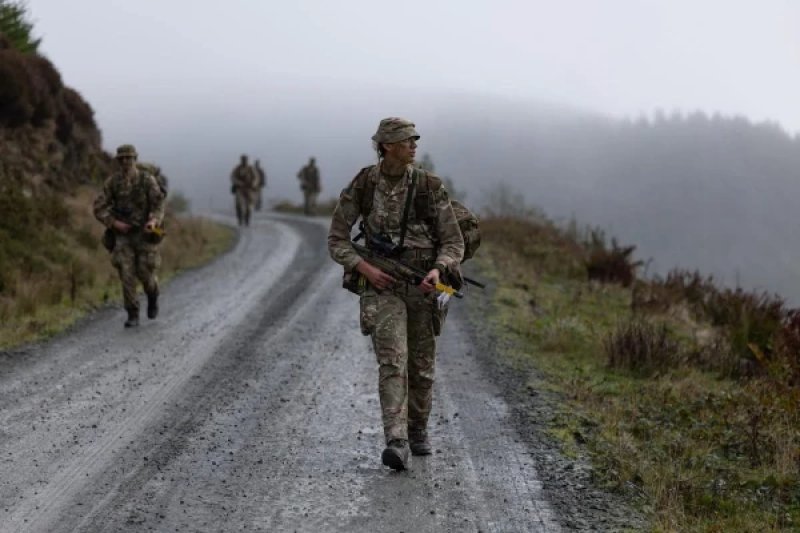
 Foto: BB.LV / Армия
This was reported by the British publication The Times. In total, this reserve consists of about 95,000 former regular army servicemen. However, according to a source in the defense ministry, the ministry has only been able to send readiness notifications for possible mobilization to about half of them. The others could not be located because the military has not maintained contact with them for years and does not have current addresses. As The Times notes, officers were tasked with checking archives and finding veterans who have been out of sight for more than two years. This happened after the publication first drew attention to this issue. According to legislation that is set to come into force at the beginning of next year, the defense minister could theoretically compel former servicemen to return to the army during a national crisis. This will apply to those who left service no more than 18 years ago and have not yet reached the age of 65. Grounds for such mobilization could include threats to national security, emergencies, attacks on British territory, or preparations for military action. The government hopes to address the situation through an information campaign aimed at encouraging former military personnel to reach out on their own. Former Minister for the Armed Forces, Alok Sharma, stated on Times Radio that the issue of accounting for reservists has remained unresolved for nearly two decades. "This has not been taken seriously enough over the last 20 years," he emphasized. According to Sharma, there are about 2.1 million veterans living in the UK, but the authorities do not have complete information about their whereabouts and professional skills. He also emphasized that the experience of former servicemen could be particularly valuable in the event of a crisis when the country needs to rapidly increase the size of the army or organize the defense of its territory. The UK is preparing for war As reported by the Ukrainian news agency UNIAN, the Royal Air Force of the United Kingdom is strengthening the protection of its air bases due to the threat of drone attacks: planes are being moved to hangars and shelters at night, and special anti-drone nets are planned to be installed for part of the aviation. British military personnel are also practicing the tactic of dispersing aircraft across different bases, believing that this reduces their vulnerability in the event of war and resembles approaches from the Cold War era. According to Royal Air Force Commander Garry Smith, the aviation must be prepared to operate in conditions where there may be no safe places even within the territory of the United Kingdom, UNIAN reports.
